The word “exosome” shows up on skincare labels more often now than it does in the literature it borrows from. For a provider deciding whether to bring an exosome-labeled topical into a practice, that gap is the actual question worth asking. Not “does it work,” but what is actually in the bottle, and whether the label matches it.
The honest version of this topic is also the stronger one commercially. Naming that labeling ambiguity directly, instead of riding along with it, is what separates a page worth trusting from the ninth page promising glow.
What "Exosome" Actually Means on a Cosmetic Label
“Exosome” is a biological term. It describes a specific class of small, lipid-bilayer extracellular vesicle released by cells through a defined endosomal pathway, a structure with a real citation base behind it, including foundational work on how these vesicles form and carry out paracrine signaling (Zhang et al., 2019, Cell & Bioscience). It is not, on its own, a regulatory category. When the word shows up on a cosmetic ingredient label, it is naming a raw-material input, not making a claim about mechanism inside skin, and cosmetic labeling frameworks generally don’t require a manufacturer to specify which of several very different starting materials the word is standing in for.
That gap matters because the market is currently using “exosome” to describe at least three structurally distinct materials, and a provider comparing two products by their label alone has no way to tell which one is actually inside. A fuller walk-through of the underlying biology lives on what exosomes are and how they’re produced; this piece assumes that ground and goes straight to the labeling problem.
Intact Vesicle, Lysate, or Conditioned Media: Three Different Starting Materials
Intact vesicles are exosomes isolated and preserved as whole, membrane-bound particles, the actual structure the biogenesis literature describes. Preserving that structure through isolation, concentration, and stabilization is the expensive, technically demanding part of the process. It’s also the material most closely tied to the mechanism of action the word “exosome” was borrowed from in the first place.
Lysate is what remains after those vesicles, or the parent cells, have been broken open. The membrane structure is gone. What’s left is a mixture of internal cargo, proteins, cytokines, and other soluble factors, without the vesicle that carried and released them. A product built from lysate can be manufactured more cheaply and stored more forgivingly than an intact-vesicle product, but calling it “exosomes” is a stretch of the term rather than a literal description. What the label calls exosomes is, more precisely, what exosomes used to contain.
Conditioned media is the cell culture supernatant left behind after cells have been grown in a laboratory setting, the fluid the cells secreted into during culture. It contains some quantity of naturally released vesicles alongside a much broader mix of secreted proteins and growth factors, at concentrations that shift considerably by cell source, culture conditions, and how much purification, if any, happened afterward. Of the three, labeling this one “exosomes” is the loosest use of the term currently in circulation.
None of these three should disqualify a product on its own. The problem is that a label reading simply “exosome complex” or “exosome-derived” gives no indication of which one is inside. Manufacturing cost and stability differ across the three, and so does particle size, which matters directly for the next question: what does intact skin actually let through.
The Penetration Question: What Intact Skin Actually Allows Through
Independent of which of the three materials a formulation contains, there’s a prior question that matters more: what does intact, unbroken skin actually let through.
The stratum corneum is a selective barrier by design, and its permeability runs largely on molecular size and lipophilicity. Exosomes, when intact, are nanoscale particles, considerably larger than the small-molecule actives (retinoids, peptides, hydroxy acids) that topical formulation science has spent decades learning to push through that barrier. Direct measurement of nanoparticle disposition in skin backs this up: particles in the tens to low hundreds of nanometers, examined by confocal imaging, stayed confined to the most superficial layers of the stratum corneum even when the barrier was already partially compromised (Campbell et al., 2012, Journal of Controlled Release). The lysate and conditioned-media fractions inside an exosome-labeled product contain smaller protein and peptide components that behave more like conventional topical actives in terms of size. That’s a separate transport question from whether an intact vesicle crosses the same barrier, and the two shouldn’t be answered as if they were one.
This is a transport question, not an efficacy question, and marketing copy in this category routinely blurs the two together. A provider reviewing a specific product’s claims should ask something narrow and answerable: what fraction of this formulation is size-compatible with intact-skin penetration, and does the manufacturer have particle-size characterization data, not just a marketing description, to back up whatever claim is being made. Accepting “exosome” as shorthand for “penetrates and acts” skips past that question entirely.
Post-Procedure Application Is a Different Conversation Than a Leave-On Serum
This is where the category’s marketing tends to collapse two genuinely different clinical situations into one.
A leave-on serum applied to intact, unbroken skin at home is working against the stratum corneum barrier just described, whatever the label says is inside it. A topical applied right after a procedure that temporarily opens that barrier, microneedling or certain laser modalities among them, sits in a different situation entirely. For a limited window, the barrier that would otherwise exclude larger particles isn’t doing that job.
That changes how a provider should evaluate a product, independent of any outcome claim. Sterility and endotoxin testing matter more, not less, once the skin is briefly open. The particle-size question from the section above stops being academic and starts being clinically relevant the moment the barrier is out of the equation. And “works on intact skin” is not the same claim as “appropriate for post-procedure application,” even though the two get marketed side by side constantly.
This is also where the category’s existing marketing tends to lean on outcome and timeline language: recovery routines, results promised within a set number of days, before-and-after framing. All of that folds a real transport-and-handling distinction into something closer to a consumer promise. The distinction itself, stated plainly, is more useful to a provider than the promise built on top of it. Our review of microneedling as a delivery-adjunct procedure covers the handling side of that combination in more detail.
What to Ask a Supplier, Not What to Ask a Marketing Page
Given all of that, the practical due-diligence list for any exosome-labeled topical, whether it’s intact vesicle, lysate, or conditioned media, Cellgenic’s catalog or someone else’s, is short and specific:
- Which of the three starting materials is actually in the formulation, stated plainly rather than implied by the word “exosome”
- Particle-size characterization data, if intact vesicles are the claim being made
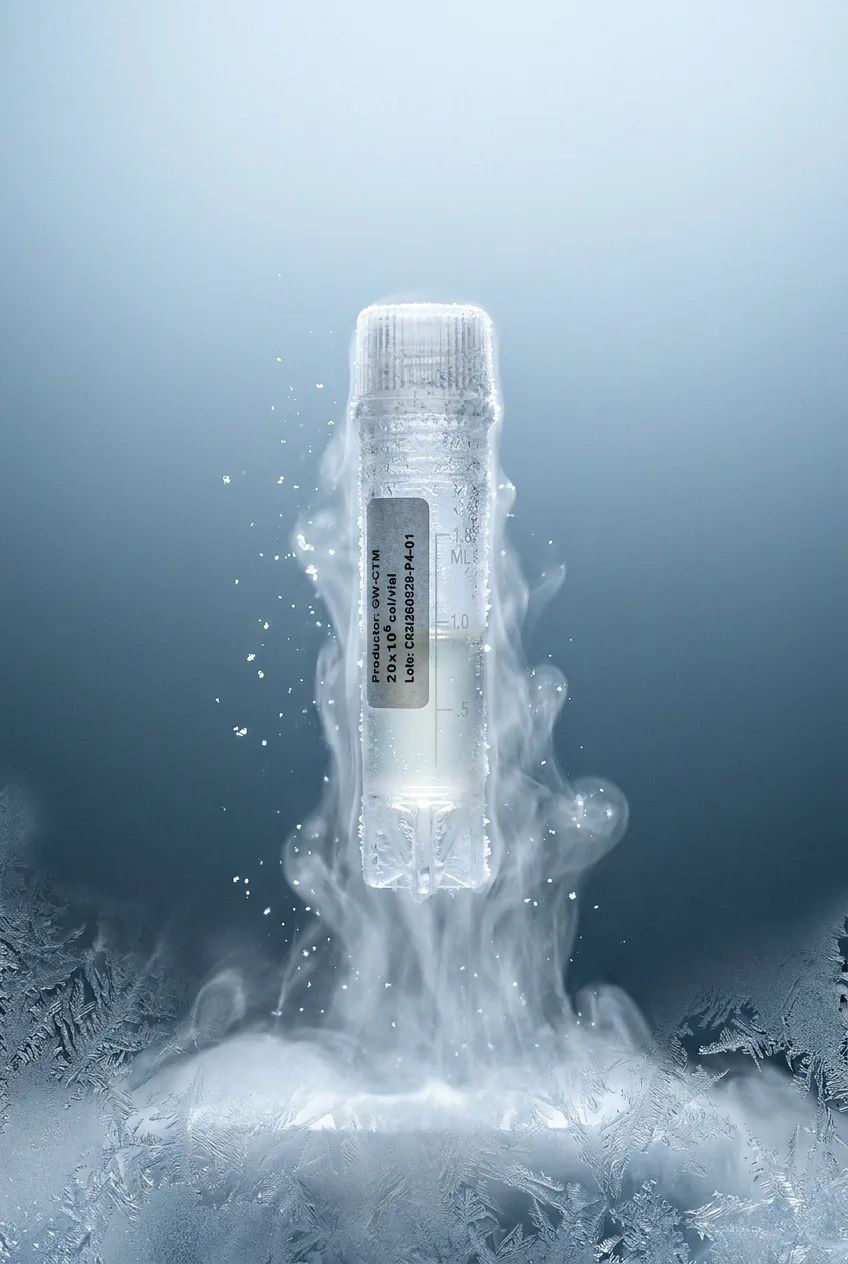
- Sterility, identity, and potency testing at the batch level, with a Certificate of Analysis available on request, not a template document reused across lots
- Manufacturing-environment documentation (cGMP, appropriate cleanroom classification) proportionate to the intended use
- Clear labeling that distinguishes intact-skin formulations from anything positioned for post-procedure use
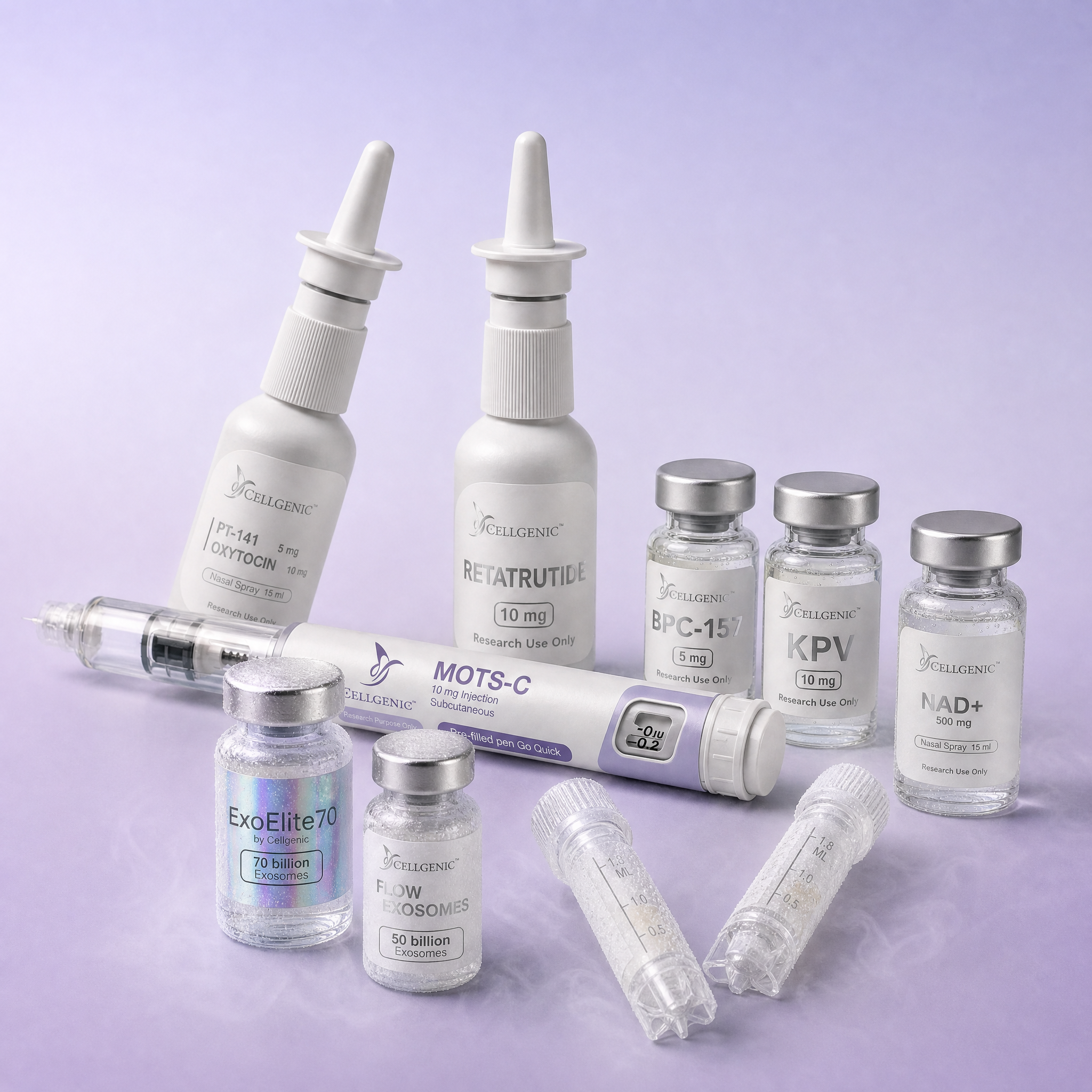
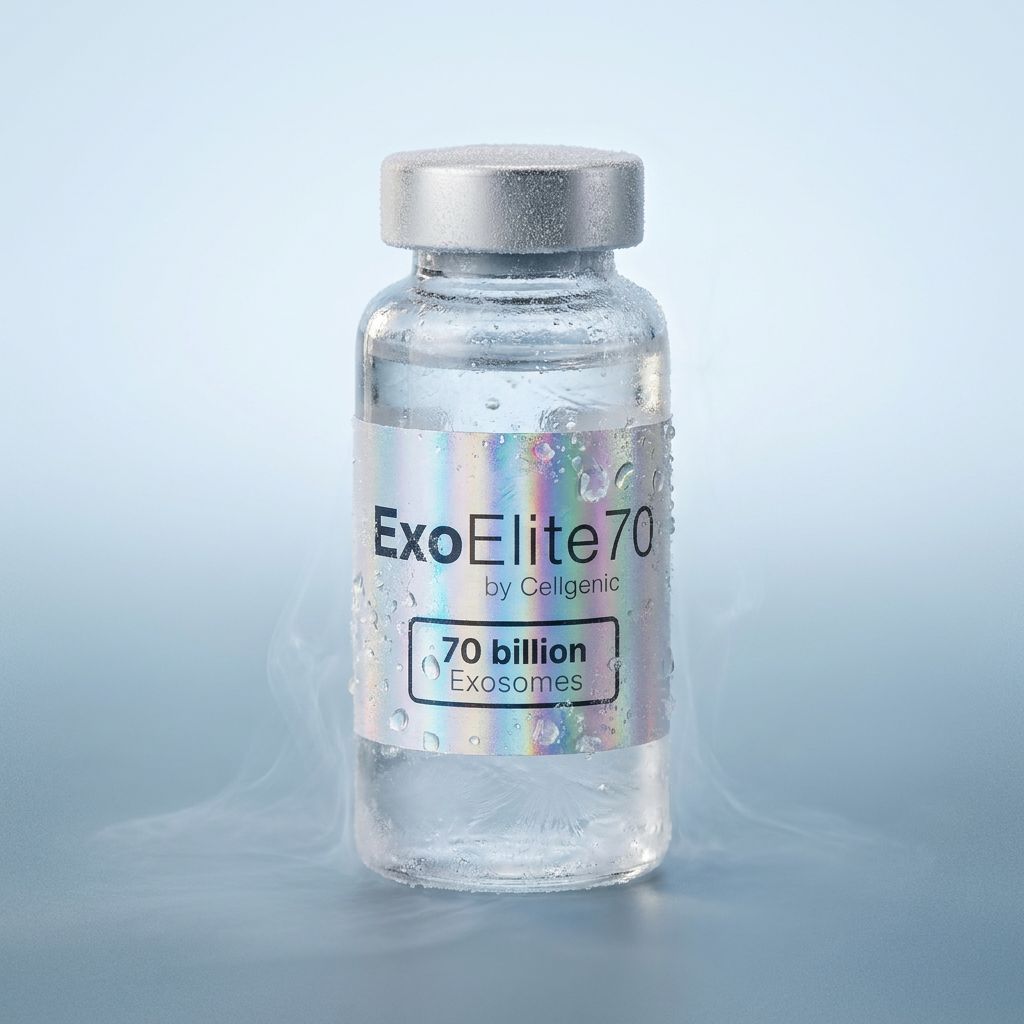
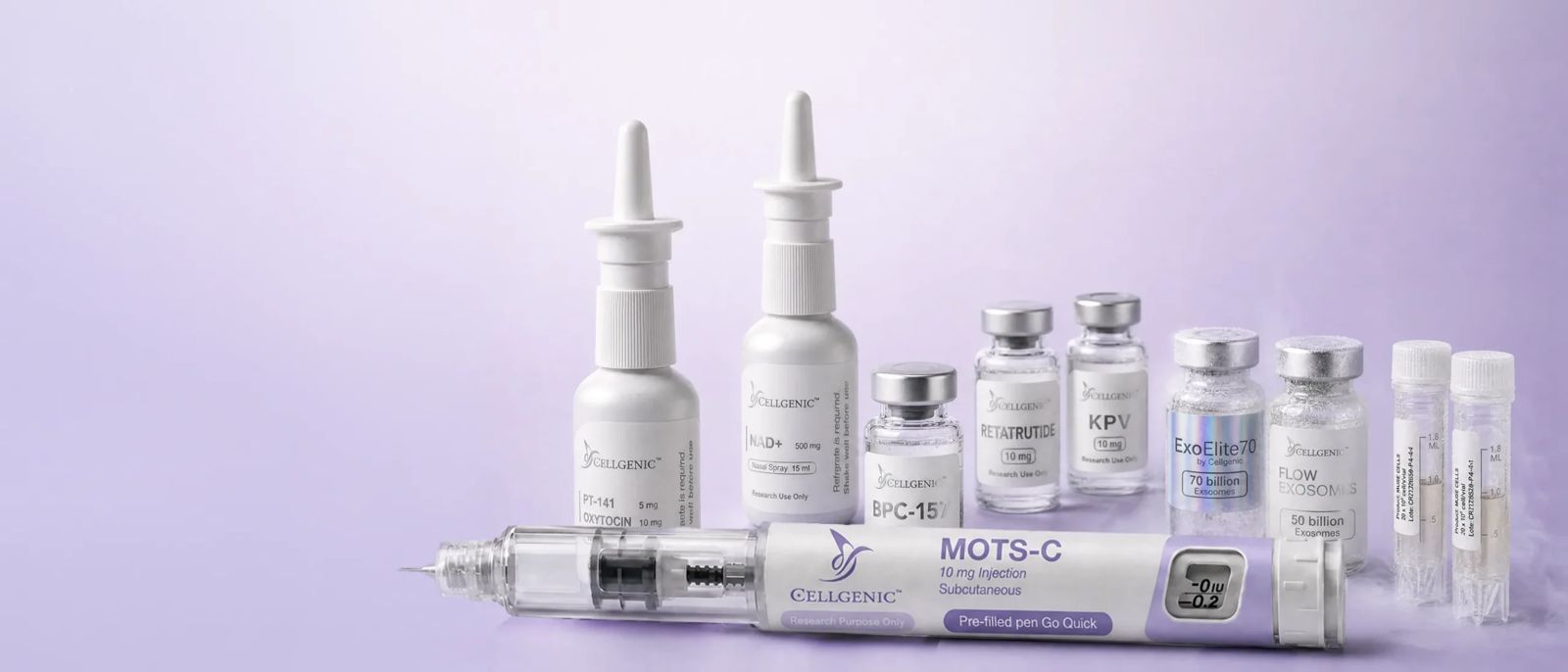
A category-by-category breakdown of Cellgenic’s exosome product lines is available for providers comparing options across the catalog, and batch-level documentation, including how to read a Certificate of Analysis line by line, is available to any verified provider evaluating a specific lot. Apply for Provider Access to review that documentation before a product reaches a procedure room, not after.
Frequently Asked Questions
Regulatory Disclaimer · Exosomes
These products are intended for laboratory research use only. They are not drugs, foods, cosmetics, or medical treatments and must not be used for any form of human or animal administration. All information provided is for educational and scientific reference only and the products should be handled exclusively by licensed, qualified professionals. Misbranding, misuse, or mislabeling of these products as therapeutic or consumable substances is strictly prohibited by law.




 Medically Reviewed By
— Written By
— Published on October 12, 2026