

 Medically Reviewed By
— Written By
— Published on October 5, 2026
On this page

What Each Material Actually Is
A cell is a complete biological unit, whether it’s a mesenchymal stromal cell, an induced pluripotent-derived line, or a rarer subpopulation such as a [Muse cell](URL-TBD: what-are-muse-cells). It carries its own genome, its own membrane, and its own capacity to proliferate or differentiate under the right culture conditions. When a cell-based product is characterized, the questions center on identity (is this actually the cell population it claims to be), viability, growth kinetics, and, for allogeneic material, donor screening and genetic stability across passage.
An exosome carries none of that machinery. It’s a membrane-bound extracellular vesicle, formed through the endosomal pathway and released when a multivesicular body fuses with the parent cell’s plasma membrane (Zhang et al., 2019). What it carries (proteins, lipids, RNA species) reflects the cell that produced it, but the vesicle itself has no nucleus, can’t replicate, and can’t become anything other than what it already is. For the fuller picture of that biology and how the terminology is actually defined, see [what an exosome is and how it differs structurally from a cell](URL-TBD: what-are-exosomes-pillar).
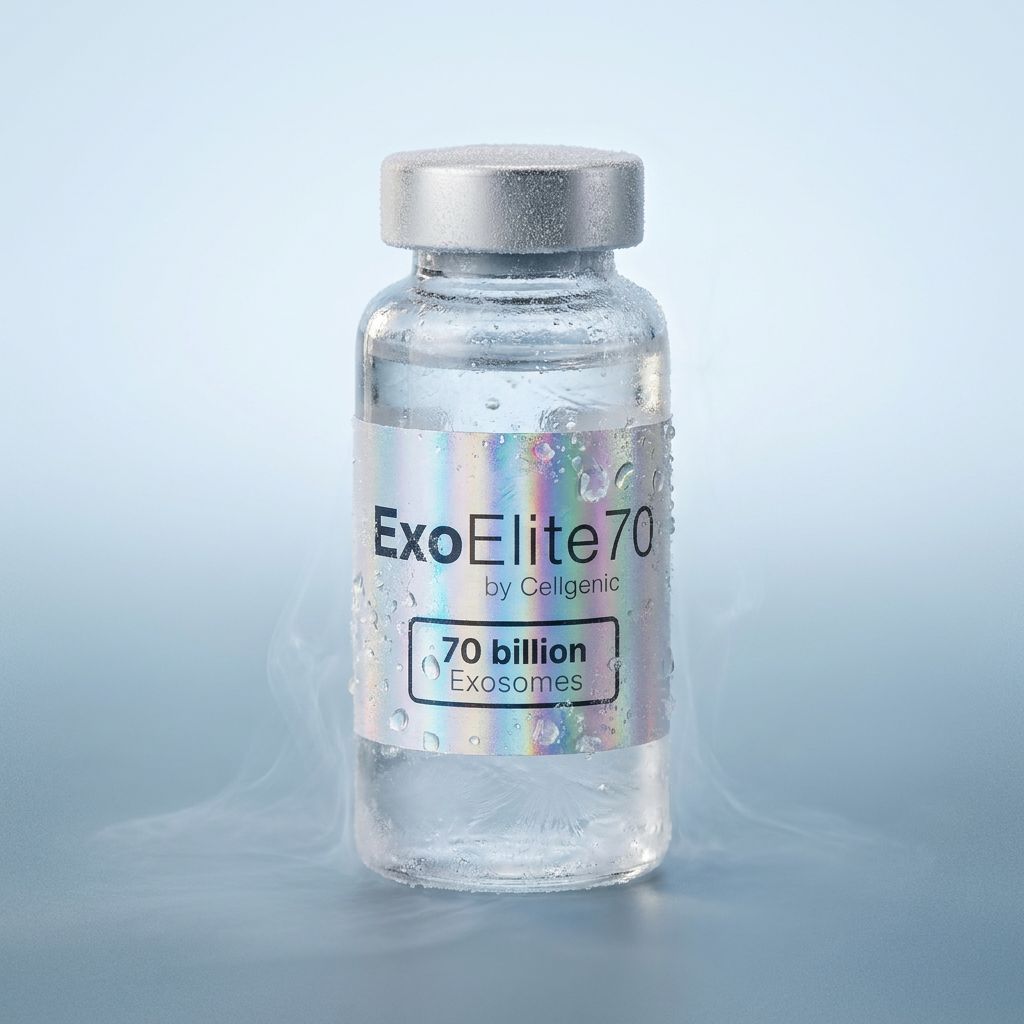
Characterizing an exosome preparation is a question of composition and concentration, not viability. This is also the reason “exosome” gets used loosely in commercial contexts to describe heterogeneous small-EV mixtures rather than a single, cleanly isolated species. That labeling looseness matters for any research buyer comparing supplier documentation, and it’s worth checking for on a Certificate of Analysis before assuming two “exosome” products are the same thing. The same distinction-within-a-category question comes up on the cell side too, most directly in how [Muse cells compare against the broader mesenchymal stem cell population](URL-TBD: muse-cells-vs-mesenchymal-stem-cells).
Storage, Shipping, and the Practical Consequence of Alive vs Cargo
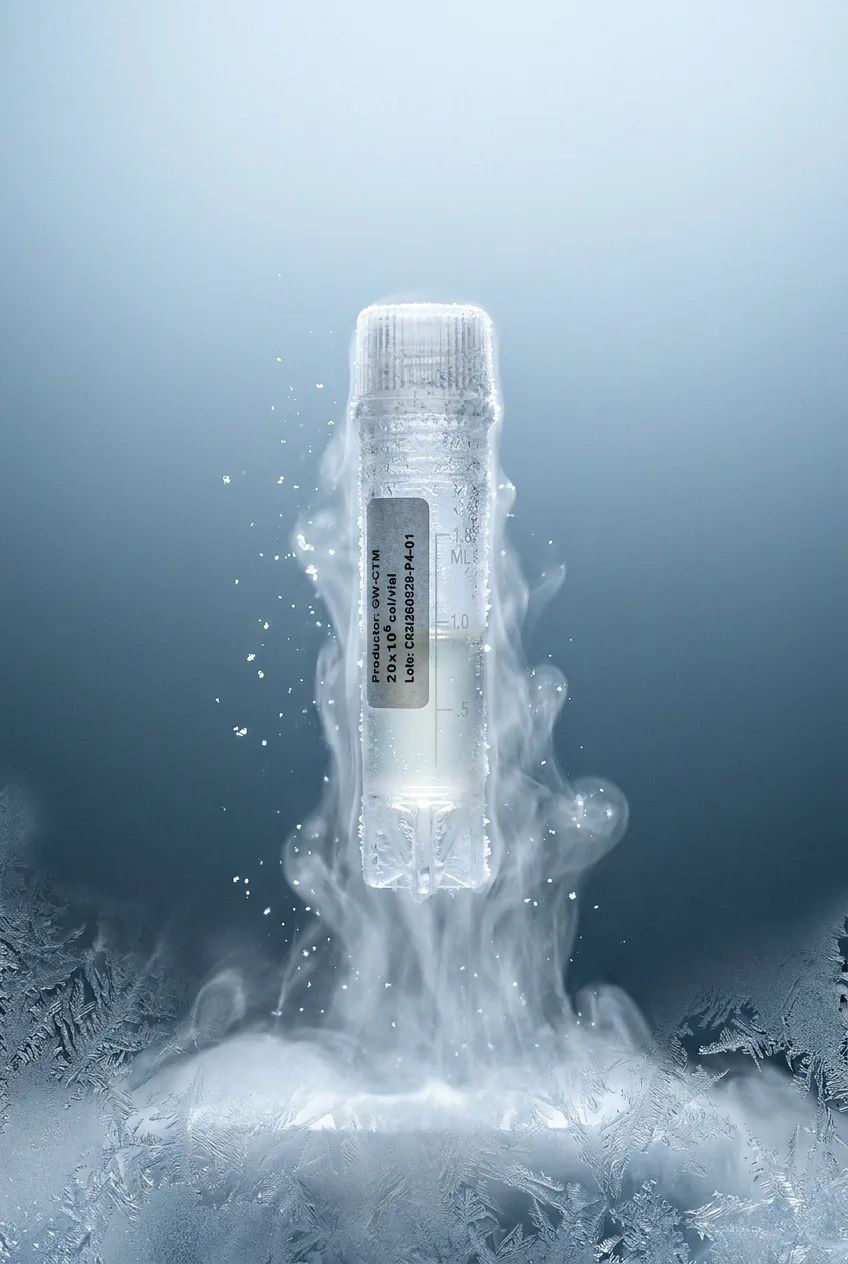
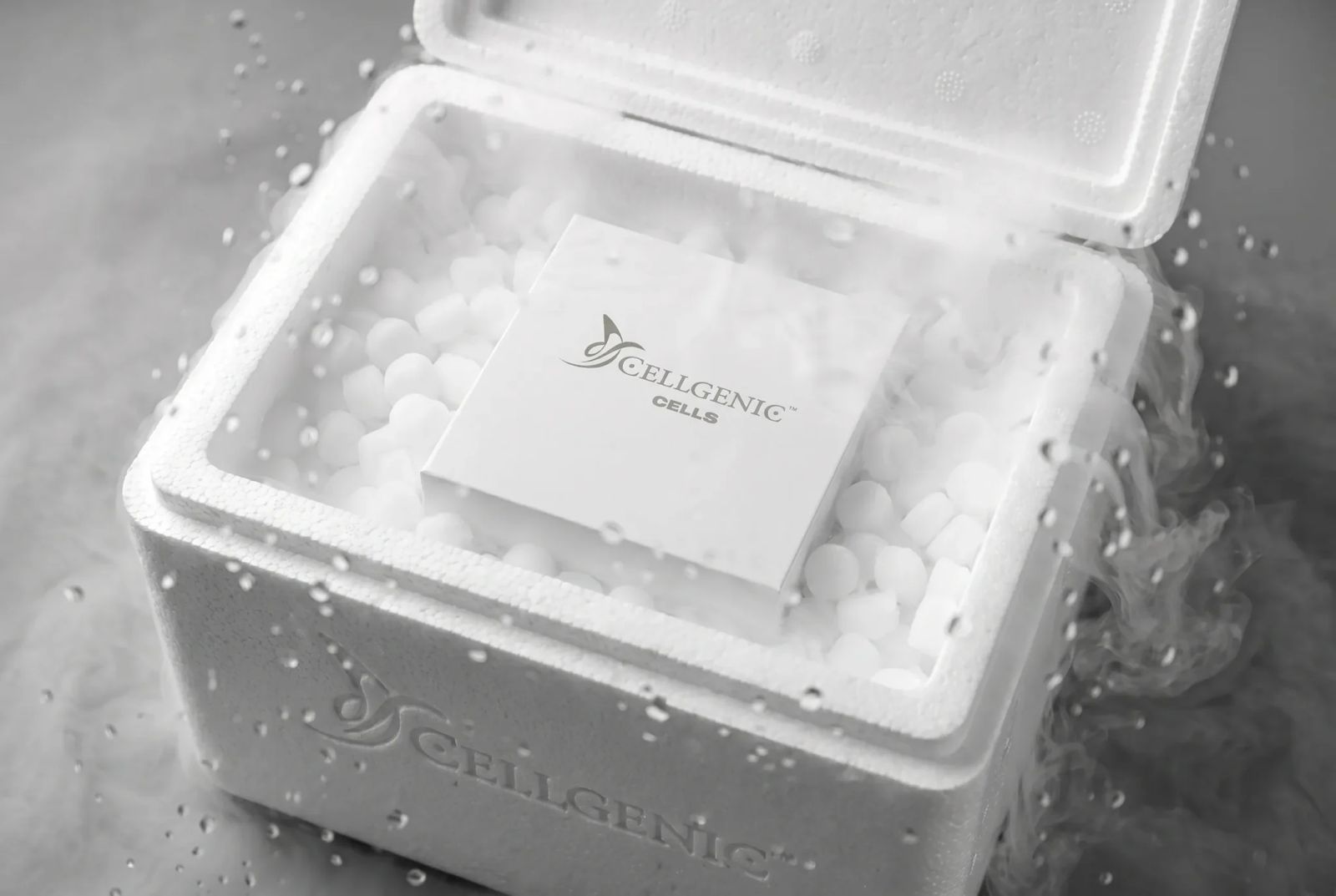
Because a cell-based product is alive, everything downstream of manufacturing is built around protecting that viability. Cryopreservation needs validated cryoprotectant formulations and controlled-rate freezing. Thawing has a narrow procedural window before viability starts to decline. Shipping typically depends on continuous cold-chain logistics, dry-shipper or liquid-nitrogen vapor-phase transport, with any temperature excursion treated as a lot-integrity event rather than a minor deviation.
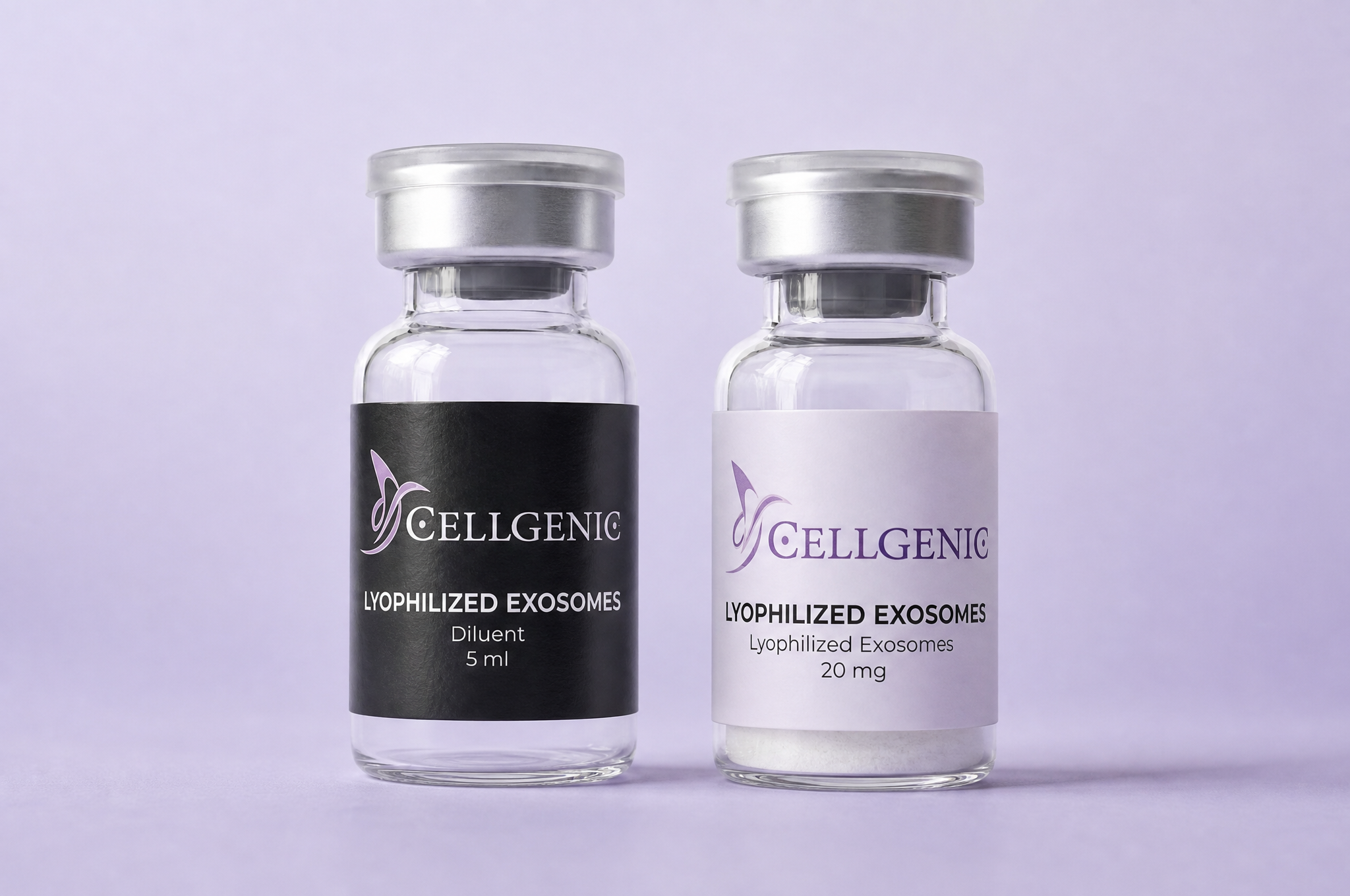
An exosome preparation doesn’t carry that same fragility, because there’s no viability curve to protect. Vesicles generally tolerate a wider range of handling conditions, and lyophilization, freeze-drying for extended shelf stability, is an active area of formulation research for exactly this reason: a cell-free product is a far better candidate for it than a living one.
Exosome logistics aren’t trivial, though. Particle concentration, vesicle integrity, and cargo stability still degrade under poor handling, and batch-to-batch consistency remains a documented open problem across the field. The failure mode is just different: a degraded exosome lot loses potency, while a compromised cell lot loses the cells themselves. Sourcing decisions add another layer here, since [how a supplier’s source material, whether mesenchymal, iPSC-derived, or plant-derived, affects downstream consistency](URL-TBD: msc-ipsc-plant-exosome-sourcing) is its own evaluation question worth a closer look before any procurement decision.
Immunogenicity Means Something Different for Each
For a cell-based product, immunogenicity comes down to whose cells they are. Autologous material, a patient’s own cells, carries minimal rejection risk by definition. Allogeneic material introduces a different calculus: histocompatibility, the chance of an immune response to donor antigens, and, for any culture-expanded population, the theoretical risk of uncontrolled proliferation. Allogeneic, culture-expanded cellular products face a materially higher characterization and testing bar in virtually every framework than minimally manipulated, autologous ones, because a living, potentially dividing donor-derived population carries a fundamentally different risk profile than an inert particle.
Exosomes are generally reported in current literature as lower-immunogenicity by comparison. There’s no whole donor cell presenting a full set of surface antigens to a recipient’s immune system. But lower isn’t zero. Vesicle-surface proteins, and residual cellular debris in an incompletely purified preparation, remain legitimate characterization concerns. Identity, purity, and potency testing still matter for an exosome lot. The reason is just different from why they matter for a cellular one. For how this same question plays out on the cell side, see Cellgenic’s [overview of Muse cell safety and immunogenicity](URL-TBD: muse-cell-safety-tumorigenicity-immunogenicity), and how the two evidence bases actually diverge.
Two Different Regulatory Starting Points, and Why That Varies by Market
This is where the clinical distinction becomes a legal one, and generalizing across markets is the fastest way to get the compliance picture wrong.
Internationally, the regulatory treatment of living, culture-expanded, or otherwise substantially manipulated cellular material is comparatively settled. A population of cells capable of proliferation or differentiation consistently draws the more rigorous biologic-product classification, typically requiring an IND-style pathway where applicable before any interventional use, across jurisdictions with mature advanced-therapy frameworks.
Exosome and extracellular-vesicle products sit in a genuinely less settled position. The European Medicines Agency’s Committee for Advanced Therapies issued guidance in 2025 clarifying that extracellular vesicles which are “not substantially modified” fall outside the current advanced-therapy-medicinal-product definition entirely, requiring case-by-case development under other regulatory frameworks instead (Limongi et al., 2026). That’s a direct acknowledgment that the existing categories weren’t built with cell-free vesicles in mind.
Tumorigenicity and Oncogenic Cargo: Context Determines the Signal
- Mexico. Cellular products fall under COFEPRIS oversight, administered through the Ley General de Salud and NOM-253-SSA1-2012, with sanitary authorization required at the establishment and laboratory level. [VERIFY: whether COFEPRIS currently applies a distinct exosome/EV-specific classification, or whether these products are reviewed under the same cellular/biologic oversight pathway, before this line is finalized.]
- Argentina. ANMAT administers registration for cellular and biologic products generally, with INCUCAI holding separate jurisdiction over hematopoietic and transplant-related cell material. [VERIFY: ANMAT’s current position on exosome/EV-specific product classification.]
- Colombia. INVIMA conducts scientific evaluation of biological products nationally. [VERIFY: whether a distinct EV/exosome review pathway exists separate from standard biologic evaluation.]
- Perú. DIGEMID, under the Ministerio de Salud, approves biological drugs. [VERIFY: DIGEMID’s current treatment of exosome-based research material specifically.]
What This Means for Evaluating Either Material
Cellgenic supplies both cell-based and exosome-based research material, so this comparison isn’t written to favor either one. The more useful question for a physician or clinic operator evaluating a supplier is whether that supplier can substantiate either category to the standard it actually requires, not which category ranks higher.
For a cell-based lot, that means documented donor screening, passage history, identity and viability testing, and a chain of custody that survives the cold-chain logistics described above. For an exosome-based lot, it means particle characterization, purity and potency testing, and clarity about exactly what population of vesicles the preparation contains, not a template document reused across lots. Either way, it means a Certificate of Analysis specific to that batch, and independent confirmation of which regulatory framework actually applies in the buyer’s own market before any research use.
For a broader look at what to check before adding any exosome-based material to a sourcing list, see what to verify before purchasing an exosome product, and for the isolation methods behind that material in the first place, how exosomes are actually obtained. Providers who want to review Cellgenic’s documentation standards directly, for either product line, can Apply for Provider Access.
Common Questions
Lower baseline immunogenicity is what the current literature generally reports for exosome preparations compared with allogeneic cellular material, since there's no whole donor cell presenting surface antigens. That's not zero risk. Vesicle-surface proteins and incomplete purification remain real characterization concerns, which is why potency and purity testing stay standard regardless of category.
Both categories carry the same research-use designation. What differs is the regulatory logic sitting underneath it, since a living, culture-expanded cell population and a cell-free vesicle preparation get evaluated against different existing categories in most frameworks.
A cell-based product has to stay viable, which means continuous cold-chain logistics and a narrow handling window. An exosome preparation has no viability to protect, so it generally tolerates a wider range of handling and storage conditions, though particle integrity and concentration still call for validated protocols.
Not necessarily, and not uniformly. The applicable classification is a live, evolving question in several jurisdictions rather than a settled one, and it should be confirmed against the current framework in the specific market in question rather than assumed from precedent elsewhere.
Batch-specific documentation, not a template, is the constant across both. What changes is the specific thing being checked: identity, viability, and donor screening for a cellular lot, versus particle characterization, purity, and potency for an exosome lot.
REGULATORY DISCLAIMER · EXOSOMES
These products are intended for laboratory research use only. They are not drugs, foods, cosmetics, or medical treatments and must not be used for any form of human or animal administration. All information provided is for educational and scientific reference only and the products should be handled exclusively by licensed, qualified professionals. Misbranding, misuse, or mislabeling of these products as therapeutic or consumable substances is strictly prohibited by law.