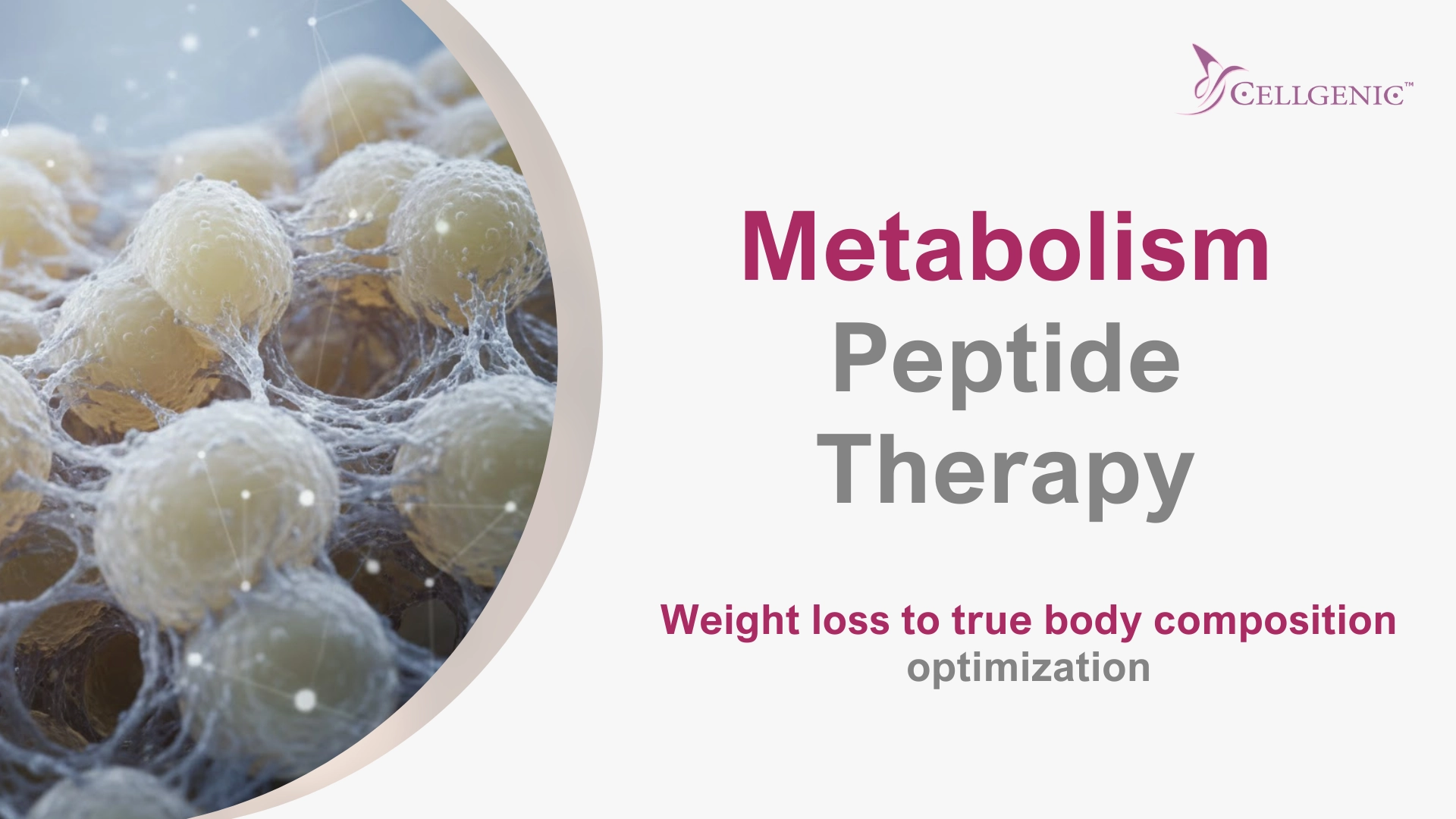
Standard weight loss programs often result in a hidden failure: muscle wasting. When patients lose weight through caloric restriction alone, they frequently sacrifice metabolically active lean tissue, leading to a lowered basal metabolic rate and the “yo-yo” effect. Peptide Therapy allows clinicians to pivot from mere weight loss to true body composition optimization. Utilizing Growth Hormone Secretagogues (GHS) offers a safer, pulsatile alternative to synthetic HGH, keeping the body in an anabolic state even during fat loss.
The Science of Selective Lipolysis
To achieve professional-grade results, practitioners must distinguish between general weight loss and targeted fat oxidation. Peptides allow for surgical precision in metabolic signaling.
- Selective Fat Loss (AOD-9604): This peptide is a C-terminal fragment of human growth hormone. It targets adipose tissue directly, stimulating lipolysis without the adverse effects on blood glucose or insulin sensitivity associated with full-molecule HGH.
- Pulsatile Secretion (Ipamorelin & CJC-1295): When administered together, these peptides act synergistically. CJC-1295 (a GHRH analog) and Ipamorelin (a Ghrelin mimetic) stimulate the pituitary gland to release endogenous growth hormone in natural “pulses.” This mimics the body’s natural rhythm, significantly reducing the risk of tachyphylaxis or pituitary shutdown.
Muscle Maintenance During Caloric Deficits
The primary challenge in clinical weight management is preventing sarcopenia. Peptide therapy ensures that the “weight” lost is predominantly adipose tissue.
- Protein Synthesis: By elevating systemic IGF-1 levels within physiological ranges, secretagogues maintain nitrogen balance and protein synthesis. This allows the patient to retain muscle mass even while in a hypocaloric state.
- Recovery and Sleep: Improved GH levels enhance deep-wave sleep cycles. For the performance-driven patient, this translates to faster recovery from resistance training, which further supports muscle retention.
Strategic Integration: The “Metabolic Performance” Tier
For endocrinology practices and weight loss centers, peptides offer a high-value entry point for long-term patient management.
- Baseline Diagnostics: Require a comprehensive metabolic panel, including fasting insulin, HbA1c, and baseline IGF-1. This ensures the protocol is tailored to the patient’s specific hormonal deficit.
- Body Composition Analysis: Move beyond the scale. Utilize DEXA scans or Bioelectrical Impedance Analysis (BIA) to track the Fat-Free Mass Index (FFMI). Documenting that a patient lost 10 lbs of fat while gaining 2 lbs of muscle is a powerful retention tool.
- Cyclical Dosing: Implement 12-to-16 week “loading” phases followed by a 4-week “washout” period. This prevents receptor downregulation and allows for consistent, long-term metabolic health.
Core Metabolic Peptides by Clinical Objective
| Objective | Recommended Peptide | Primary Biological Action |
| Targeted Lipolysis | AOD-9604 | Stimulates fat breakdown via beta-3 adrenergic receptors. |
| GH Stimulation | Ipamorelin / CJC-1295 | Triggers natural, pulsatile growth hormone release. |
| Visceral Fat Reduction | Tesamorelin | Specifically targets hard-to-lose abdominal fat. |
| Glucose Regulation | MOTS-c | Enhances mitochondrial expression and insulin sensitivity. |
Operationalizing for Practice Growth
Integrating metabolic peptides transforms your clinic into a destination for Performance Medicine. This model shifts the conversation from “dieting” to “optimization.”
Educate your staff on the safety profile of secretagogues compared to exogenous HGH. Because these peptides work through the feedback loop of the pituitary-pituitary axis, they offer a vastly superior safety margin. By positioning these as a premium, science-backed tool for body recomposition, your practice can capture the growing market of patients who demand both health and high-level physical performance.