fbpx

Peptides

For Research Use Only. These products are intended solely for laboratory research and are not for human or veterinary use, diagnosis, or therapy.

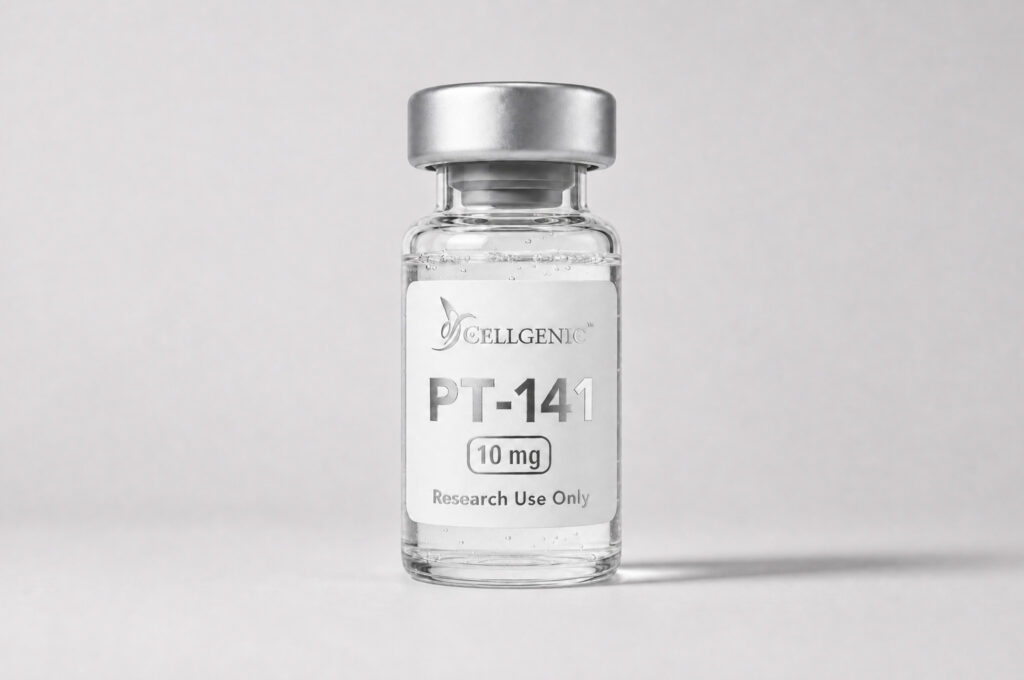
Discover the extensive range of Peptides available at Cellgenic, your trusted provider of innovative solutions for regenerative medicine research. Our Peptides are formulated to support various biological pathways and are widely used in laboratory settings for in-vitro studies related to healing, regeneration, and cellular function. At Cellgenic, we are committed to advancing the field of regenerative medicine research through high-quality Peptides.

Cellgenic’s Peptides include a diverse selection of formulations frequently used to study tissue repair, cellular rejuvenation, and biological modulation. All our Peptides undergo rigorous quality controls to ensure purity and consistency, making them a reliable choice for licensed professionals engaged in scientific research. Among our leading offerings are BPC 157, Epithalon, GHK-CU, IPAMORELIN, TB 500, and TIRZEPATIDE.

BPC 157 is commonly utilized in research investigating cellular repair pathways. Epithalon is often included in studies related to aging biology, while GHK-CU is frequently researched for its association with skin and tissue modeling. IPAMORELIN is widely used for its role in growth-hormone–related studies, supporting research in muscle physiology and metabolic processes. TB 500 is commonly evaluated for its potential involvement in recovery mechanisms, and TIRZEPATIDE is used in metabolic and weight-management research models.

These Peptides are produced with meticulous attention to quality and consistency, making them a reliable component of any research laboratory’s toolkit. Choose Cellgenic for your Peptide research needs and benefit from advanced manufacturing standards and professional-grade materials. Our commitment to innovation ensures that our Peptides support researchers in achieving dependable and reproducible results. Trust Cellgenic to deliver the essential Peptides that support progress in regenerative medicine research.

Disclaimer: These products are intended for laboratory research use only. They are not drugs, foods, cosmetics, or medical treatments and must not be used for any form of human or animal administration. All information provided is for educational and scientific reference only and the products should be handled exclusively by licensed, qualified professionals. Misbranding, misuse, or mislabeling of these products as therapeutic or consumable substances is strictly prohibited by law.

The next generation of
Regenerative medicine.

Advancing regenerative medicine

Isolating the beneficial signals given out by stem cells and using them, rather than stem cells themselves, is truly the next generation of Regenerative medicine.

Exosomes: master communicators in cellular processes

Exosomes are cell-derived nanoparticles that play a pivotal role in cell-to-cell communication and are involved in a wide range of physiological processes.

The crucial role of exosomes in intercellular messaging and gene regulation

They have an important role in the transfer of proteins, mRNA, miRNA and other bioactive molecules between cells and regulate gene expression in recipient cells, thus influencing various molecular path-ways.

The next generation of
Regenerative medicine.

Exosomes: master communicators in cellular rocesses


Exosomes are cell-derived nanoparticles that play a pivotal role in cell-to-cell communication and are involved in a wide range of physiological processes.

The crucial role of exosomes in intercellular messaging and gene regulation

They have an important role in the transfer of proteins, mRNA, miRNA and other bioactive molecules between cells and regulate gene expression in recipient cells, thus influencing various molecular path-ways.

Advancing regenerative medicine


Isolating the beneficial signals given out by stem cells and using them, rather than stem cells themselves, is truly the next generation of Regenerative medicine.