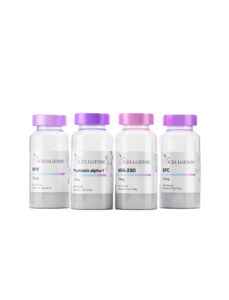

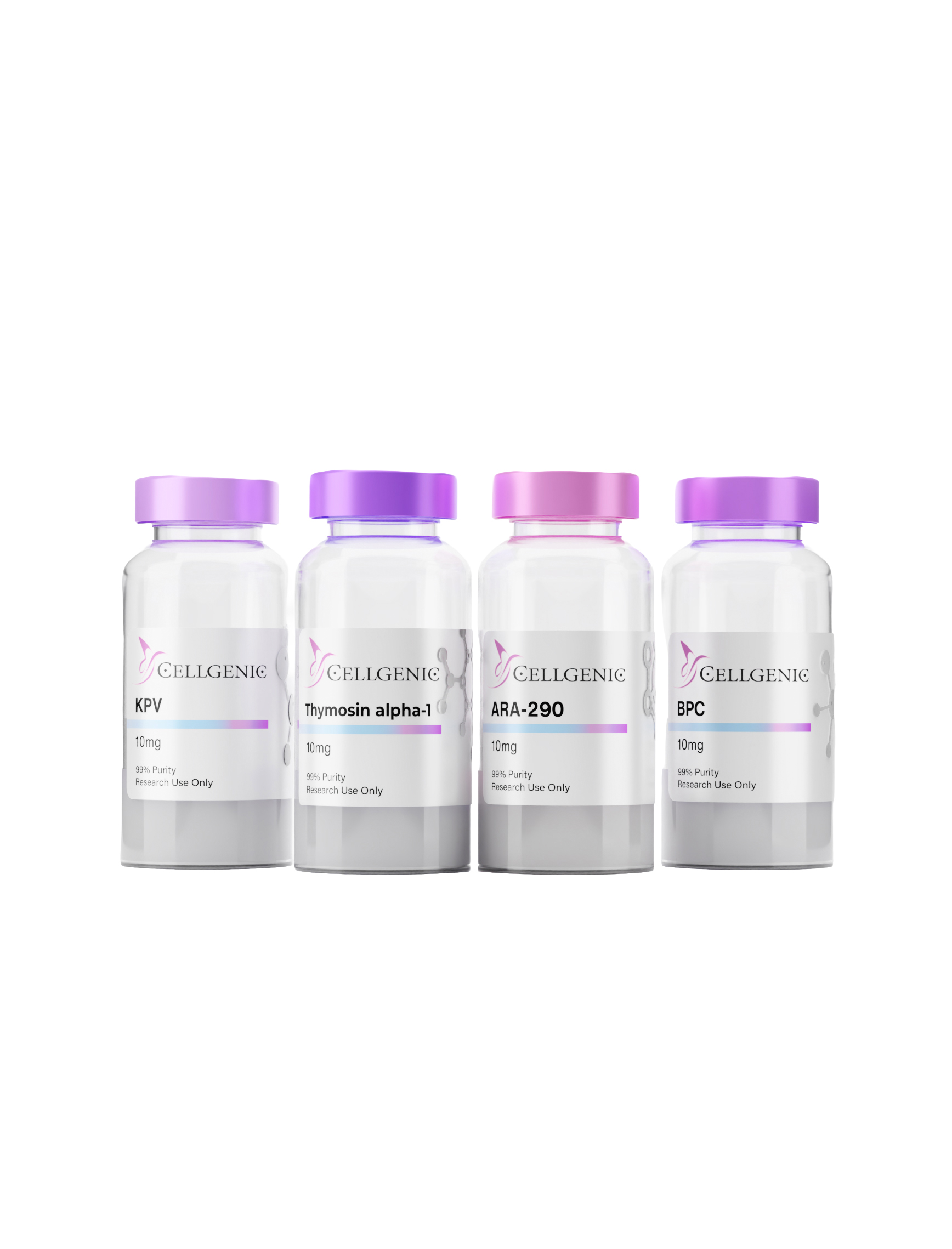
1. Component Analysis
This protocol is designed as a Neuro-Restorative intervention, moving beyond symptom suppression to target structural nerve repair and immunomodulation.
ARA-290 (Cibinetide)
- Role: Selective Innate Repair Receptor (IRR) Agonist & Neuro-Regenerative Agent.
- Mechanism: ARA-290 is a non-hematopoietic peptide derived from the structure of Erythropoietin (EPO). It selectively binds to the Innate Repair Receptor (IRR) to downregulate pro-inflammatory cytokines (TNF-$alpha$, IL-6) and stimulate the repair of damaged tissues. Crucially, it promotes small nerve fiber regeneration and remyelination without stimulating erythropoiesis (red blood cell production), thereby avoiding the thrombotic risks associated with standard EPO therapy.
Thymosin Alpha-1 (TA1)
- Role: Biological Response Modifier (BRM) & T-Cell Regulator.
- Mechanism: TA1 acts as an immune “conductor,” restoring homeostasis by modulating T-cell maturation and function (specifically CD4+ and CD8+ subsets). In autoimmune contexts, it helps mitigate “immune hyperactivity” (auto-reactivity against nerve tissue) while enhancing viral defense, effectively reducing the neuro-inflammatory burden.
KPV (Lysine-Proline-Valine)
- Role: Mast Cell Stabilizer & Anti-Inflammatory.
- Mechanism: A C-terminal fragment of $alpha$-Melanocyte Stimulating Hormone ($alpha$-MSH). KPV exerts potent anti-inflammatory effects by inhibiting the NF-$kappa$B pathway. In neuro-inflammation, it is specifically utilized to stabilize mast cells within the central and peripheral nervous systems, preventing the release of histamine and cytokines that drive neurogenic pain and “brain fog.”
BPC-157
- Role: Gut-Brain Axis Modulator & Systemic Repair Agent.
- Mechanism: Acts systemically to upregulate growth hormone receptors on fibroblasts and promote angiogenesis (new blood vessel formation). In this protocol, it serves to repair the gut mucosal barrier (“Leaky Gut”), thereby reducing the translocation of bacterial endotoxins (LPS) into the bloodstream which can exacerbate systemic and neuro-inflammation.
2. Protocol Breakdown
Core Bundle Strategy
- Target Population: Patients with complex, treatment-resistant pain syndromes (CRPS, Lyme Disease, Long COVID Neuropathy) who have failed conventional modulators (e.g., Gabapentin, Pregabalin).
- Therapeutic Logic: A “Halt and Regenerate” tri-phasic approach:
- Halt the Attack: TA1 and KPV modulate the immune response to stop active autoimmune damage and mast cell degranulation.
- Regenerate Tissue: ARA-290 activates the IRR to stimulate the physical regrowth of small nerve fibers.
- Systemic Support: BPC-157 reduces background inflammatory load via gut barrier restoration.