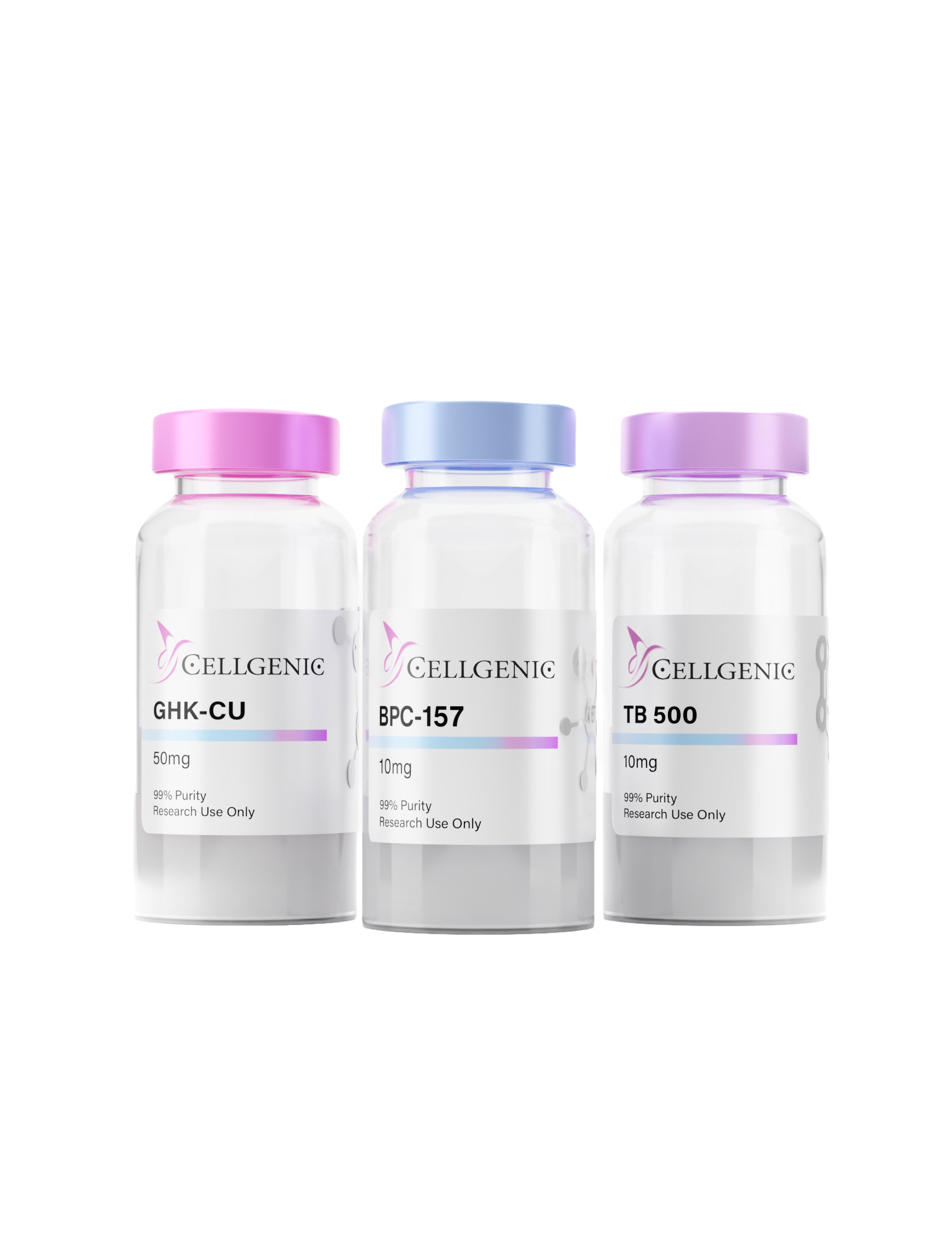

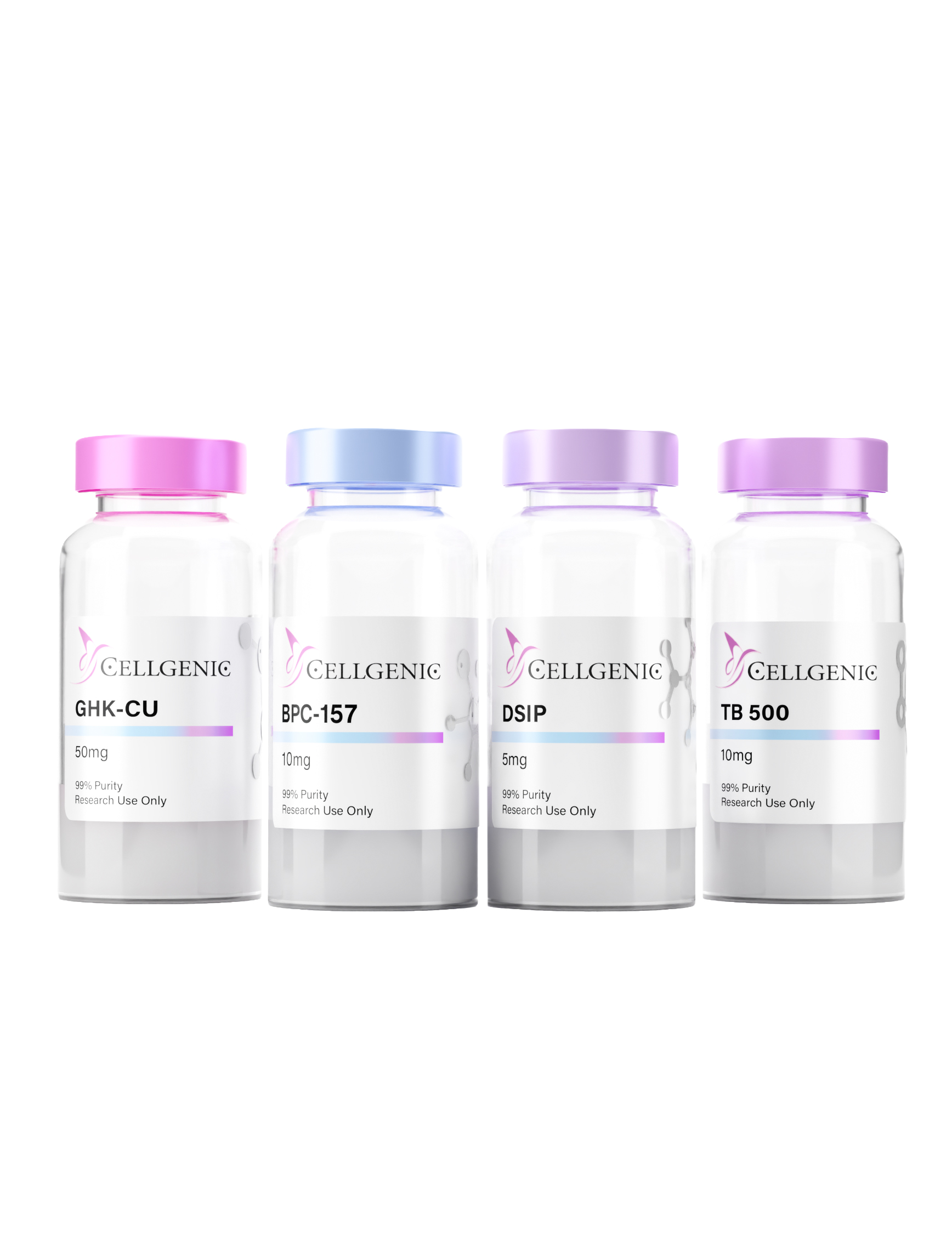
1. Component Analysis
This protocol distinguishes itself from the “Acute” stack by adding a neurological component (DSIP). It recognizes that chronic pain is not just tissue damage, but also a nervous system issue (“Central Sensitization”) and a sleep issue.
- BPC-157:
- Role: Systemic Anti-Inflammatory.
- Mechanism: In chronic cases, BPC-157 is used to dampen the systemic inflammatory response and repair the “wear and tear” on connective tissue (tendinopathy, arthritis).
- TB-500:
- Role: Systemic Repair Signal
- Mechanism: This process is supported by angiogenesis, which restores vital blood flow and nutrients to poorly vascularized tissues, and cytokine modulation that downregulates pro-inflammatory signals like $TNF-\alpha$ to resolve chronic inflammation. Simultaneously, the peptide acts as a chemoattractant, recruiting and differentiating stem cells into functional muscle or connective tissue to replace degenerated structures.
- GHK-Cu (Copper Peptide):
- Role: Genetic Reset.
- Mechanism: GHK-Cu is shown to reset genes to a younger, healthier state. In chronic pain, it helps break down old, calcified scar tissue (fibrosis) and encourages the synthesis of new, elastic collagen.
- DSIP (Delta Sleep-Inducing Peptide):
- Role: The “Pain Gate” Reset.
- Mechanism: Chronic pain disrupts sleep, and sleep deprivation lowers the pain threshold (making pain feel worse). DSIP is included to force deep restorative sleep and lower Substance P (a pain neurotransmitter) and cortisol, breaking the chronic pain cycle.
2. Protocol Breakdown
Core Bundle
- Target: Patients with Arthritis, Fibromyalgia, or “Old Football Injuries” that never healed.
- The Logic: This is a “Systemic Reset” stack.
- BPC/GHK work on the physical tissue structure.
- TB-500 Systemic Repair Signal
- DSIP works on the brain’s perception of pain.