
1. Component Analysis
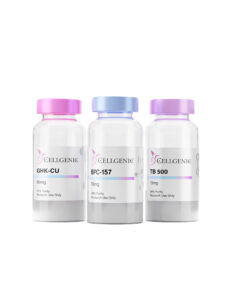
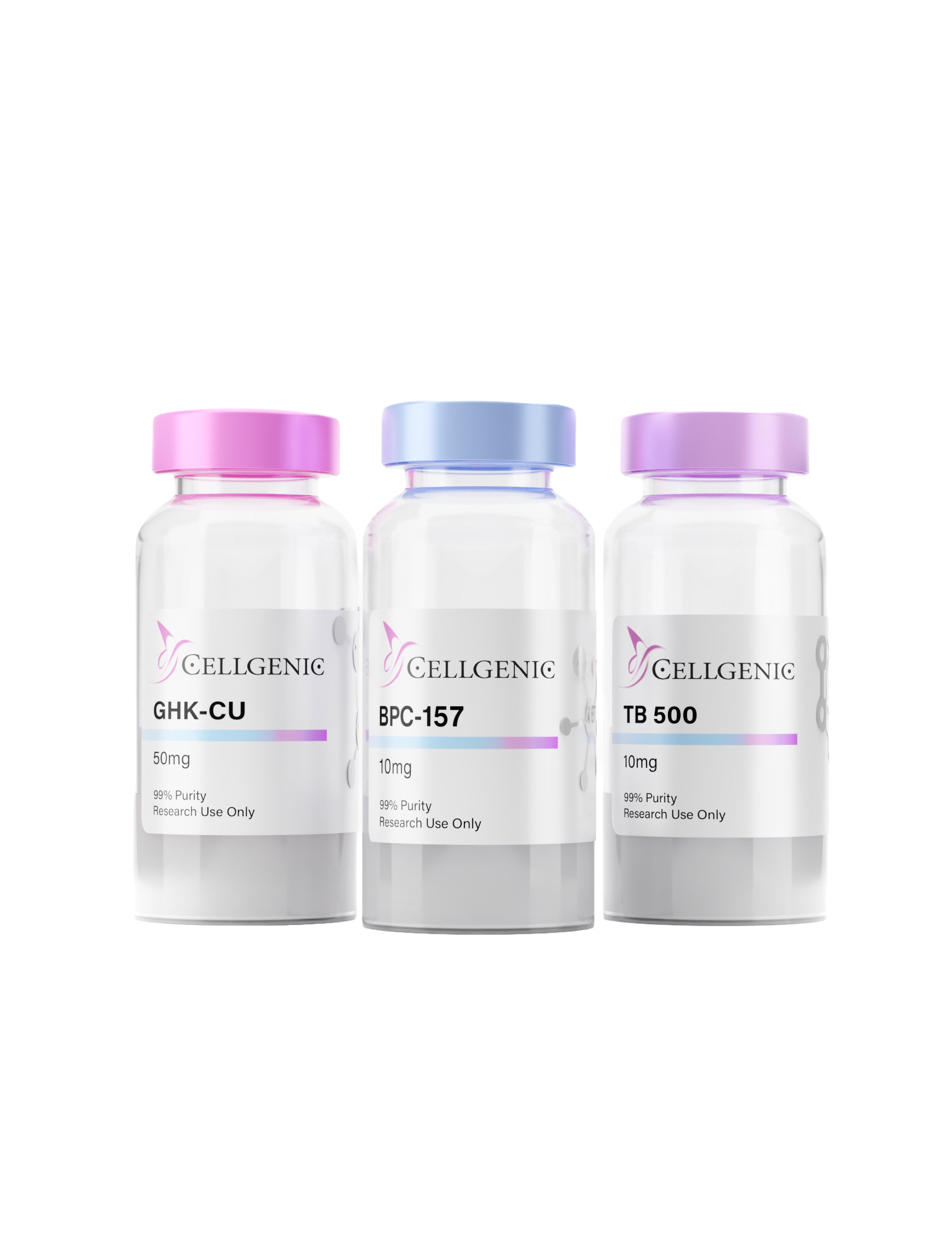
This is the classic “Wolverine Stack” used in regenerative medicine. It focuses entirely on angiogenesis (new blood vessel formation), collagen synthesis, and cell migration to the site of injury.
- BPC-157 (Body Protection Compound):
- Role: The “General Contractor.”
- Mechanism: Derived from gastric juice, it signals the body to upregulate growth hormone receptors on tendon fibroblasts. It massively increases nitric oxide and promotes the formation of new capillaries (angiogenesis) to bring blood flow to avascular tissues like tendons and ligaments.
- TB-500 (Thymosin Beta-4):
- Role: The “Transporter.”
- Mechanism: A synthetic version of a naturally occurring protein. It sequesters actin (a cell building block) and helps immune cells and repair cells migrate specifically to the injured tissue. It also prevents scar tissue formation (fibrosis) in muscles.
- GHK-Cu (Copper Peptide):
- Role: Collagen Remodeling.
- Mechanism: While famous in skincare, injectable GHK-Cu stimulates the breakdown of unhealthy collagen (scar tissue) and the synthesis of new, healthy collagen. It is also a potent anti-inflammatory and antioxidant.
2. Protocol Breakdown
Core Bundle
- Target: Post-surgical patients (ACL, rotator cuff) or athletes with acute tears.
- The Logic: This is a “Repair and Rebuild” stack.
- BPC-157 stops the inflammation and starts the blood flow.
- TB-500 ensures the repair cells get to the injury site.
- GHK-Cu ensures the tissue heals structurally strong rather than as a clump of scar tissue.