


 Medically Reviewed By
— Written By
— Published on November 3, 2026
On this page
The Short Version
- Exosomes: The FDA’s position is that no exosome product is approved, and exosomes intended to treat disease are regulated as drugs and biologics. [1][2]
- Cells: The FDA approved its first mesenchymal stromal cell (MSC) therapy in December 2024 for a narrow pediatric indication. [8]
- Other jurisdictions: The EU and Japan offer defined pathways, including Japan’s conditional approval route. Neither offers a shortcut around premarket review for products sold with therapeutic claims.
- “Research use only”: The label does not override how a regulator reads a product’s marketing and intended use. [10]
Why Intended Use Drives Classification
United States: Cells
The same caution applies to MUSE cells. Their clinical evidence is small and early-phase, and the main investigational product, CL2020, was discontinued by its developer in February 2023. See our review of Muse cell clinical trials for details.
United States: Exosomes
Enforcement has continued. Examples include
- Supreme Rejuvenation (May 2025): The FDA called its “stem cell exosome” products unapproved new drugs and unlicensed biological products, citing disease-related marketing claims. [3]
- Platinum Biologics (August 2025): The FDA described its two exosome products as drugs and biological products requiring premarket review. [4]
- 2026 letters: Secondary legal analyses describe further warning letters, including R3 Medical Companies (August 14, 2026). One analysis says the letter alleges unapproved products and cGMP violations and raises questions about how products sold as exosomes were characterized. [10]
One compilation counts at least five warning letters to cell and exosome sellers between September 2025 and September 2026. Counts differ across secondary sources, so check the FDA’s warning letter database for the current list.
U.S. States: Florida’s 2025 Law
European Union
Japan
Mexico and Latin America
Mexico changed its legal framework this year. A decree reforming the General Health Law was published on January 15, 2026, and took effect the next day. Its provisions on stem cells include:
- Expanded Ministry of Health powers over stem cell policy.
- New definitions such as “stem cell bank” and “regenerative medicine facility.”
- Stem Cell Transplant Committees in establishments that perform infusions.
- A combined Ethics and Research Committee for establishments conducting health research.
- A role for COFEPRIS in coordinating pharmacovigilance.
COFEPRIS also oversees clinical trials involving cell therapy products. It has acted against clinics offering unproven MSC treatments, including a 2015 closure in Mexico City. A draft standard on stem cell research and therapy (NOM-260-SSA1-2017) was still pending as of April 2025. How the 2026 decree is applied will depend on implementing regulations, so it is worth watching.
What “Research Use Only” Means
A research-use-only (RUO) designation signals a supplier’s intended use: in vitro and preclinical laboratory work, with no administration to humans or animals. It does not exempt a product from scrutiny. Regulators look at marketing, customers, and surrounding conduct, and they judge intended use from objective evidence [10].
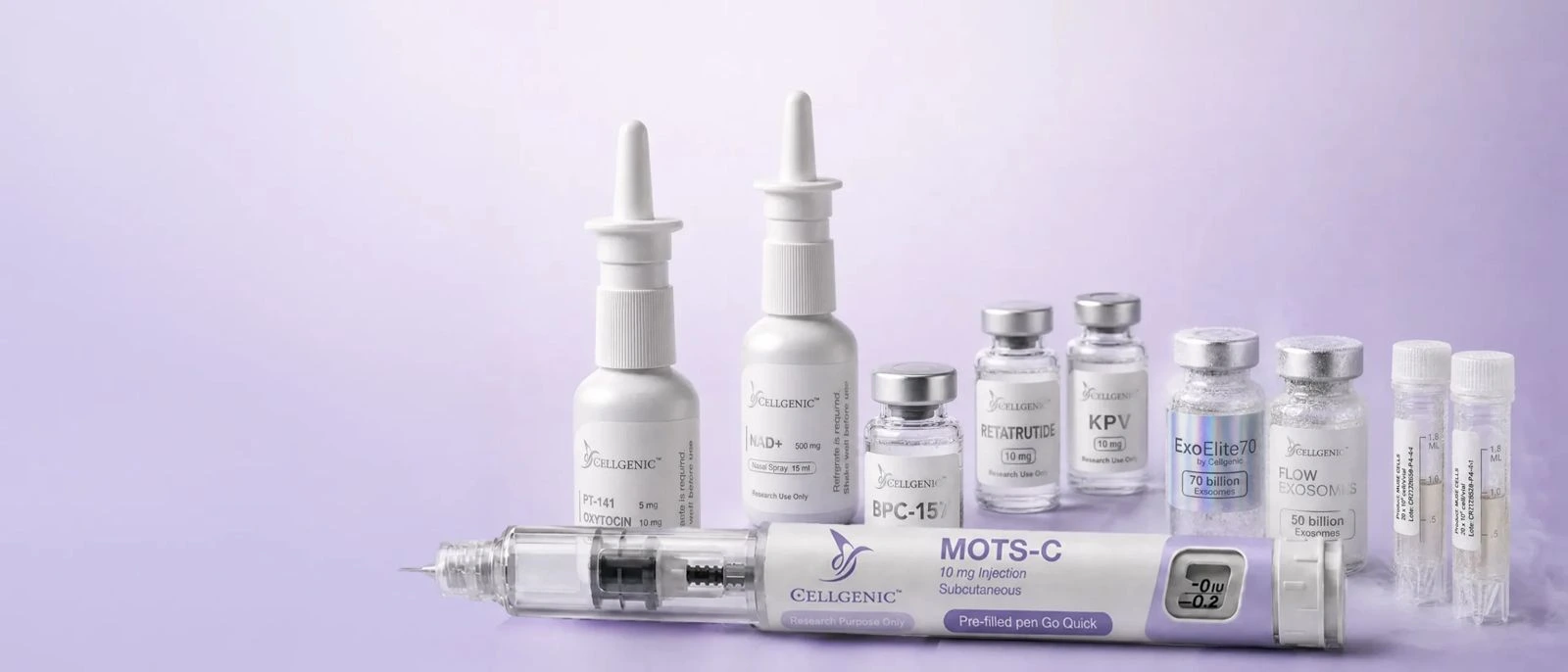
For reference, Cellgenic’s MUSE cell product page states that the cells are for laboratory research and preclinical use only, are supplied to verified providers, and are not for introduction into humans or animals. That is a statement about labeling, not a claim that any product is approved for treatment.
Quality and Characterization
Whatever the legal category, regulators and researchers expect cells and exosomes to be well characterized. That means documented identity, potency, sterility, endotoxin and mycoplasma testing, and traceable batches. Cellgenic states that its batches ship with a certificate of analysis covering sterility, mycoplasma, identity, and potency.
For exosomes, the International Society for Extracellular Vesicles publishes MISEV2023, a consensus guideline on EV separation, characterization, and reporting. It is research standard, not a regulatory approval. Still, it is a useful benchmark when a supplier says a product contains exosomes, because the 2026 enforcement discussion shows regulators asking the same question. [10]
What to Watch Next
- Mexico: Implementing rules under the 2026 decree and any final stem cell standard.
- FDA enforcement: Further warning letters to suppliers and clinics, plus any updates to its exosome statements.
- State laws: Whether other states follow Florida and how the federal government responds.
- Cell approvals: Whether Ryoncil is followed by other MSC approvals and whether any exosome IND programs advance.
- Confirmatory trials: Whether investigational cell types such as MUSE cells gain late-stage programs.
A Practical Checklist for Researchers and Providers
- Identify the intended use and whether the claims match the label.
- Ask whether the product has an approval, an IND, or a documented ethics-committee-approved protocol.
- Request batch-level documentation and verify it independently.
- Treat disease-related marketing claims for unapproved products as a red flag.
- Confirm requirements in your own jurisdiction, because the US, EU, Japan, and Mexico differ.
Conclusion
In 2026 the regulatory picture for cells and exosomes is clearer than the marketing suggests. In the US, exosomes remain unapproved and subject to active enforcement. Cells are regulated as biologics, with one narrow MSC approval so far. The EU and Japan offer defined pathways, and Mexico is rebuilding its stem cell framework. “Research use only” describes an intended use and is not a regulatory shield. Anyone working with cell or exosome materials should read claims critically, document their sources, and check the rules where they practice.
Frequently Asked Questions (FAQs)
MUSE cells have attracted scientific interest because of their ability to tolerate certain stressful conditions and differentiate into multiple cell types. Their biological characteristics distinguish them from other studied stem cell populations.
References
- FDA. Public Safety Notification on Exosome Products (Dec 6, 2019). https://www.fda.gov/vaccines-blood-biologics/safety-availability-biologics/public-safety-notification-exosome-products
- FDA. Public Safety Alert Due to Marketing of Unapproved Stem Cell and Exosome Products (posted 12/09/2019). https://www.fda.gov/safety/medical-product-safety-information/public-safety-alert-due-marketing-unapproved-stem-cell-and-exosome-products
- FDA. Warning Letter: Supreme Rejuvenation, LLC (May 5, 2025). https://www.fda.gov/inspections-compliance-enforcement-and-criminal-investigations/warning-letters/supreme-rejuvenation-llc-700749-05052025
- FDA. Warning Letter: Platinum Biologics, LLC (Aug 15, 2025). https://www.fda.gov/inspections-compliance-enforcement-and-criminal-investigations/warning-letters/platinum-biologics-llc-705090-08152025
- FDA. Guidance: Regulatory Considerations for HCT/Ps: Minimal Manipulation and Homologous Use. https://www.fda.gov/regulatory-information/search-fda-guidance-documents/regulatory-considerations-human-cells-tissues-and-cellular-and-tissue-based-products-minimal
- Federal Register, Vol. 85, No. 140 (July 21, 2020): notice of HCT/P guidance and enforcement discretion period. https://www.govinfo.gov/content/pkg/FR-2020-07-21/html/2020-15718.htm
- Hogan Lovells. FDA authority to crack down on regenerative medicines upheld as grace period ends. https://www.hoganlovells.com/en/publications/times-really-up-fda-authority-to-crack-down-on-regenerative-medicines-upheld-as-grace-period-ends
- FDA. FDA Approves First Mesenchymal Stromal Cell Therapy to Treat Steroid-refractory Acute Graft-versus-host Disease (press release). https://www.fda.gov/news-events/press-announcements/fda-approves-first-mesenchymal-stromal-cell-therapy-treat-steroid-refractory-acute-graft-versus-host
- FDA. FDA approves remestemcel-L-rknd for pediatric SR-aGVHD (Dec 18, 2024). https://www.fda.gov/drugs/resources-information-approved-drugs/fda-approves-remestemcel-l-rknd-steroid-refractory-acute-graft-versus-host-disease-pediatric
- Armstrong Brady Lyons. FDA Warning Letter to R3 Medical Companies (Aug 2026) analysis (secondary source). https://www.armstrongbradylyons.com/library/fda-warning-letter-r3-medical-stem-cell-exosome-august-2026
- Haute Living. Are Exosomes FDA-Approved for Aesthetics? (secondary source). https://hauteliving.com/hautemd/guides/aesthetics-wellness/are-exosomes-fda-approved-for-aesthetics
- Florida Senate. 2025 Summary of Legislation Passed: CS/CS/SB 1768, Stem Cell Therapy. https://www.flsenate.gov/Committees/DownloadBillSummary/3247