 Medically Reviewed By
— Written By
— Updated on September 16, 2026
Medically Reviewed By
— Written By
— Updated on September 16, 2026
The fast facts
On this page
Why the cheapest vial is often the most expensive decision
Check 1 Purity, measured and stated
- Is a purity percentage stated, with its testing method? “High purity” is marketing; “≥98% by HPLC” is a measurement.
- Is purity reported per batch, or is it a blanket catalog claim? Real synthesis varies batch to batch; a supplier reporting per-batch purity is testing per batch.
- What does the impurity profile look like? In mechanistic or quantitative work, the identity of the impurities can matter as much as the headline number.
Check 2: A batch-specific Certificate of Analysis
- The generic spec sheet is the same PDF on every order, describing the compound in general rather than your batch specifically. This is not a COA. [3]
- COA “on request” or “available on request only.” Documentation you have to chase is documentation the supplier isn’t structurally committed to. Proof shipped by default is the stronger signal.
- No named batch/lot on the certificate. Without a lot number that matches your vial, the document can’t do its job.
Check 3 End-to-end traceability and manufacturing control
- Do they manufacture or resell? A manufacturer synthesizes and characterizes in its own facility and can account for every stage. A reseller passes along material and, at best, documentation it didn’t produce.[4]
- Is there a defined manufacturing standard? cGMP certification and controlled cleanroom conditions signal a process built for consistency, not just a warehouse. [1]
- Can they trace a specific batch end-to-end? One chain of custody is what makes a result reproducible and a problem diagnosable. [3]
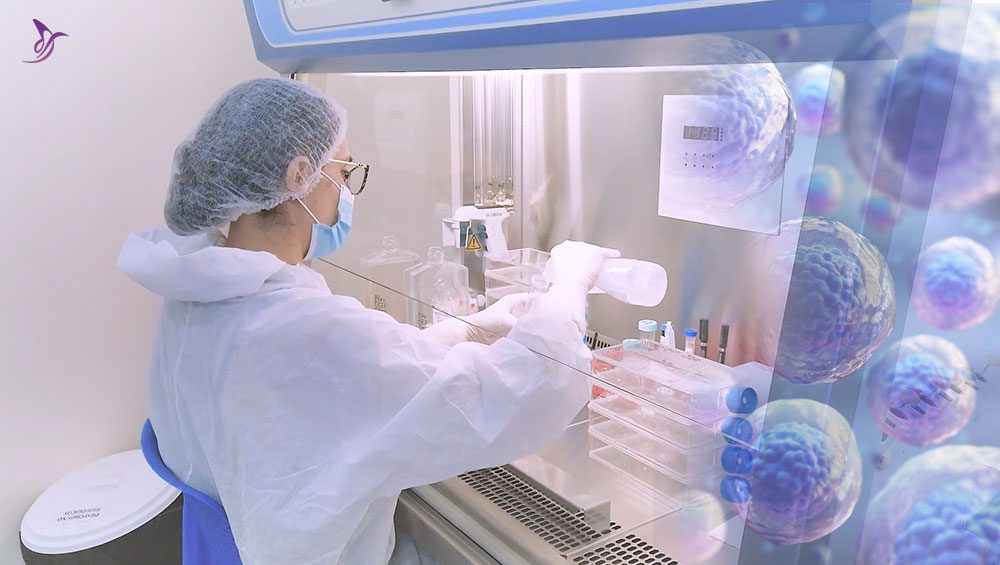
This is the check that price can’t fake and that resellers structurally can’t clear. CellGenic manufactures its research peptides in its own cGMP-certified laboratory, the same lab that characterizes the compound, signs the COA, and controls custody from sourcing through shipping. You can review the single-lab model or the research peptide range. [2]
A quick scorecard you can use on a supplier call
- Can you send a batch-specific COA for the exact lot I’d receive?
- What purity do you guarantee, and by what method?
- Do you manufacture in your own facility, and to what standard?
- Is documentation shipped with the order or only on request?
- Can you trace this batch from synthesis to shipping?
Making the decision
Choosing a research peptide supplier is, at its core, choosing how much of your uncertainty you’re willing to outsource. The right supplier absorbs it; every batch arrives already answering the questions that would otherwise become your problem at the bench. The wrong one hands it back to you, one ambiguous result at a time.
CellGenic operates on a provider-verified model: pricing and ordering unlock after you confirm your professional research credentials, which is part of how the supply chain stays accountable. If you’ve done the vetting and want a source whose default is a signed COA in the box, verify your research credentials to access catalog and batch documentation, or log in to the provider portal if you’re already verified.
FOR RESEARCH USE ONLY. NOT FOR HUMAN OR VETERINARY CONSUMPTION. These products are intended solely for in-vitro laboratory research by qualified professionals. They are not drugs, foods, cosmetics, or dietary supplements, and have not been evaluated or approved by the FDA. Nothing in this content is medical advice or a recommendation for human use; introduction into humans or animals is prohibited. You must meet the minimum age (21+) and agree to the site’s terms to purchase.
Frequently Asked Questions
Verifiability of whether the supplier can prove identity and purity per batch with a real Certificate of Analysis, and trace each batch end-to-end. Price is secondary to that.[2,3,4,5]
A source that manufactures or distributes peptides for in-vitro and preclinical laboratory research under a “For Research Use Only” designation, for qualified professionals.
Ask for a stated purity percentage with its testing method (e.g., HPLC), reported per batch, and request a sample batch COA before ordering. [4,5]
A manufacturer synthesizes and characterizes the compound in its own facility and signs its own COA. A reseller repackages material produced elsewhere and usually can’t vouch for the original custody.
A named batch/lot number matching your vial, actual measured identity and purity values, the tests performed, and a signature from the lab that ran them. [2]
It’s a weaker signal than documentation shipped by default. A supplier structurally committed to proof includes the batch COA with the order rather than making you chase it.
It signals a controlled, defined manufacturing process built for batch-to-batch consistency, which is what reproducible research depends on. [1]
Verification restricts sales to qualified professionals and supports an accountable supply chain. It’s why pricing and ordering may unlock only after credentials are confirmed.
Not necessarily, but price alone tells you nothing about purity or provenance. The relevant comparison is total cost, including the risk of unusable data from an undocumented compound.
Verify your professional research credentials to unlock catalog access and batch documentation, then order compounds that ship with a batch-specific COA.
References
- U.S. Food and Drug Administration. Quality Systems Approach to Pharmaceutical Current Good Manufacturing Practice Regulations. Guidance for Industry. Available from: FDA Full Textfda
- United States Pharmacopeia. General Chapter <1080>: Bulk Pharmaceutical Excipients—Certificate of Analysis. Defines a Certificate of Analysis as documentation relating specifically to testing results from a representative sample of the batch being delivered. Available from: USP Chapter Informationdrugfuture
- United States Pharmacopeia. General Chapter <1078>: Good Manufacturing Practices for Bulk Pharmaceutical Excipients. Describes batch or lot identification and documentation that records the history of a batch from raw materials through completion. Available from: USP GMP Chapterpharmacopeia
- Peptide Science Info. Peptide Purity Testing: HPLC and Mass Spectrometry Explained. Describes reversed-phase HPLC for purity assessment and mass spectrometry for peptide identity confirmation. Available from: Peptide Purity Testing Guidepeptidescienceinfo
- MtoZ Biolabs. Detection of Peptide Purity by RP-HPLC and Mass Spectrometry. Discusses the complementary use of reversed-phase HPLC and mass spectrometry in peptide purity and identity analysis. Available from: Full Textmtoz-biolabs