





 Medically Reviewed By
— Written By
— Published on November 27, 2026
On this page
What Are MUSE Cells?
Who Should Consider the MUSE Cells Online Course?
Medical Specialties and Practice Leaders
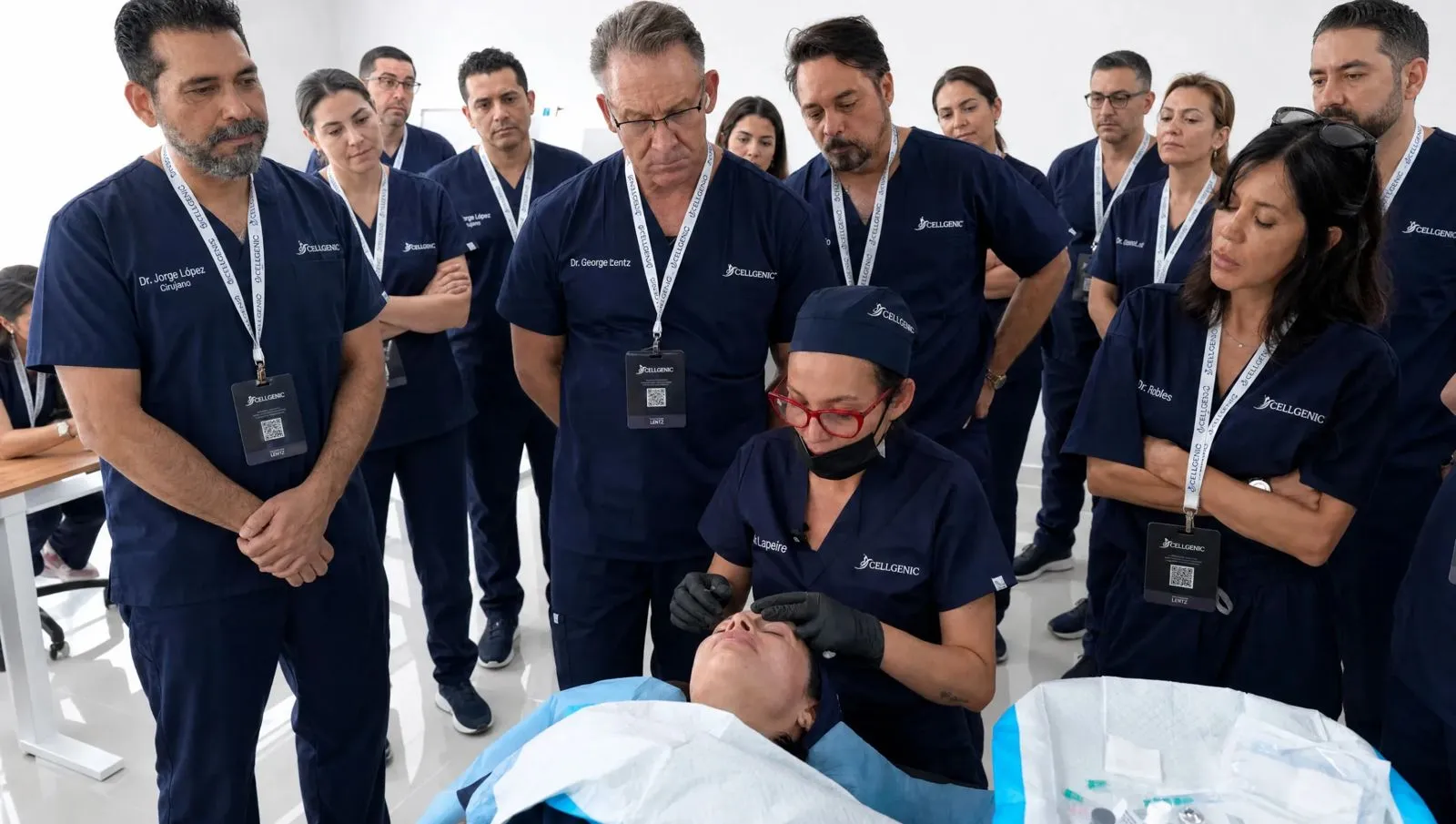
Medical professionals working within relevant specialisms may wish to implement a formalised cell teaching programme. Neurology, physiotherapy and orthopaedics often assess cellular regeneration-related work. Practice owners can standardise their workforce’s understanding by introducing a formalised teaching element.
Eligible Researchers and Provider Verification
Scientists can also gain advanced knowledge on Muse cells. However, only those who are medically qualified can enrol and have access to our training. Students and healthcare support workers cannot enrol in our medical training.
Access to the online portal is made available to those who successfully pass Cellgenics verification. Undertaking this training does, however, not confer personal medical qualification or licence. Doctors should always adhere to the local medical board, college, and relevant legislative guidelines.
What Will You Learn Inside the Course?
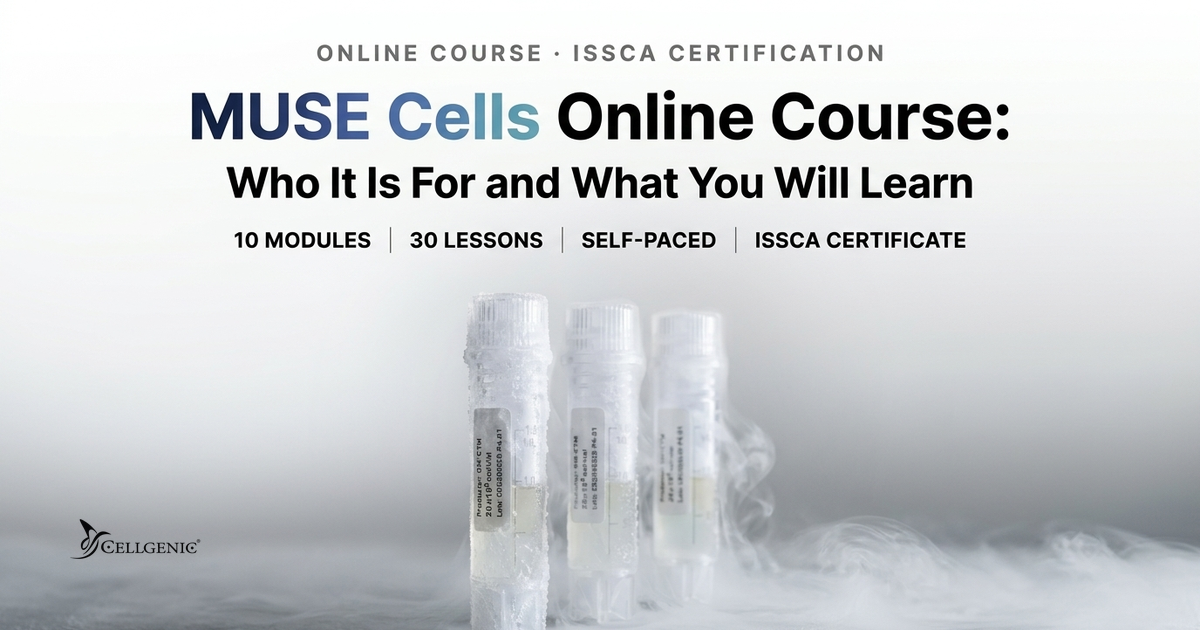
Cellgenic offers the Advanced Online Certification in MUSE Cells for eligible physicians. The curriculum contains 10 learning modules and 30 recorded lessons. Learners earn official ISSCA certification after completing the program requirements.
MUSE Cell Fundamentals
Mechanisms of Action
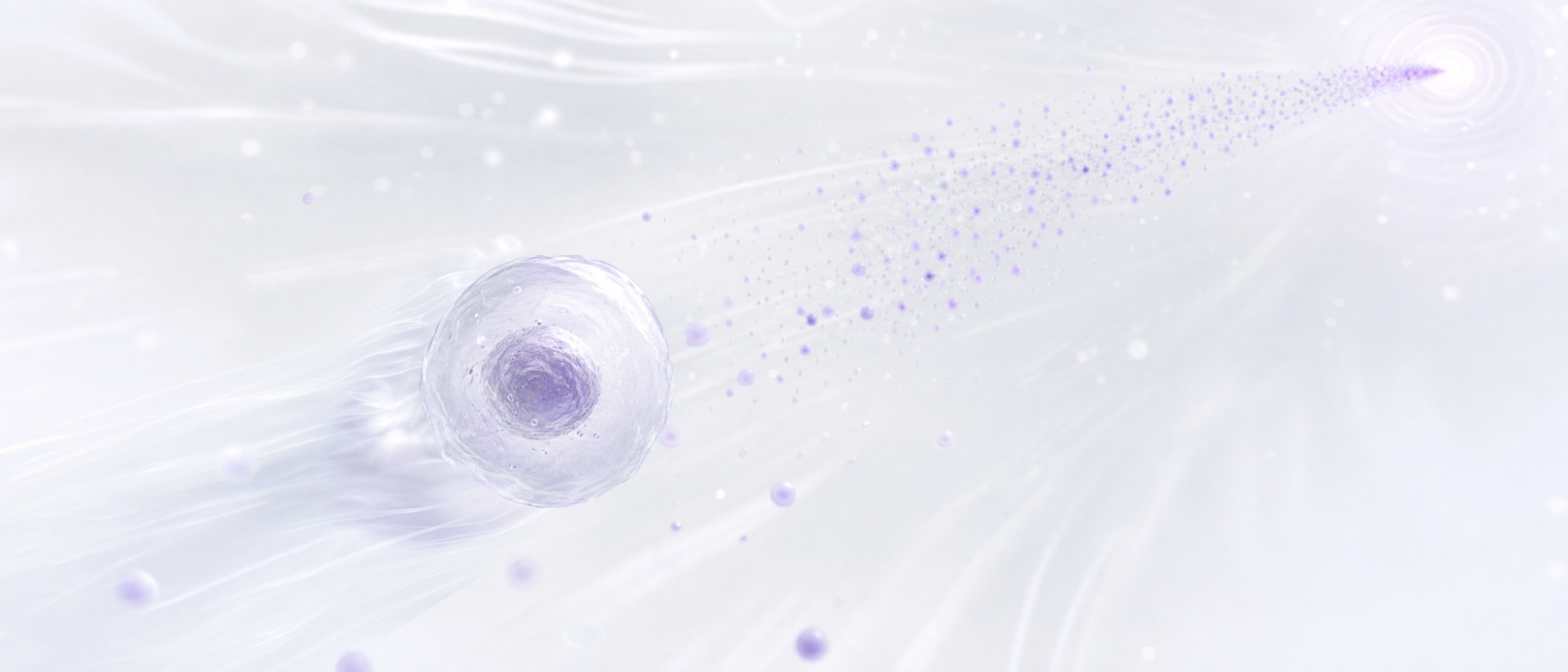
Lessons introduce the S1P–S1PR2 homing pathway involved in tissue injury signaling [4, 7]. Sphingosine-1-phosphate and its receptor help explain how cells sense damaged sites. Learners also study stress tolerance, immunomodulation, and lineage differentiation concepts [1, 2, 8].
Scientific concepts are presented carefully without overstating established clinical outcomes. Researchers continue investigating how these pathways behave across different biological systems [4, 7].
Understanding Current Clinical Evidence
This area examines how preclinical and clinical studies investigate MUSE cell applications [4, 6]. Physicians learn to assess study design, sample size, and control groups. Evaluating research quality and study limitations prevents overinterpreting early trial data.
Patient Assessment and Clinical Considerations
Online Training includes modules on assessment and general knowledge of patient-related risks. Doctors explore the importance of a patient’s background, additional health issues, and expectations. Again, training does not contain guidance regarding specific management and medication.
Clinical Applications and Practice Integration
The curriculum introduces neurological and orthopedic research areas relevant to regenerative medicine [2, 5, 6]. It also addresses systemic clinical applications explored in current scientific literature [2, 8]. Finally, modules cover practice integration, documentation habits, and clinical workflow alignment.
MUSE cells online course materials focus on scientific and operational principles rather than administration instructions. They do not provide injection steps, clinical procedures, or treatment dosing schedules.
Course Format, Certification, and Learning Resources
The Advanced Online Certification in MUSE Cells runs completely online on a self-paced schedule for verified learners. After provider verification, physicians can study lessons at their own pace. Lifetime content access includes course materials and future curriculum updates when available.
Downloadable lesson presentations, key takeaways, and reference materials support structured study. Spanish and Portuguese subtitles help international physicians follow every recorded lecture.
| Course Feature | Available Details |
| Online Format | 100% online and self-paced |
| Curriculum | 10 modules and 30 lessons |
| Certification | Official ISSCA certification |
| Access | Lifetime content access |
| Study Resources | Presentations, takeaways, and references |
| Subtitles | Spanish and Portuguese |
Why Choose Cellgenic for Professional Learning?
Scientific Accuracy, Safety, and Research Limitations
Conclusion
Frequently Asked Questions
References
- Que H, Mai E, et al. Multilineage-differentiating stress-enduring cells: a powerful tool for tissue damage repair. Frontiers in Cell and Developmental Biology. 2024;12:1399907. https://pubmed.ncbi.nlm.nih.gov/38872932/
- Kuroda Y, Kitada M, Wakao S, et al. Unique multipotent cells in adult human mesenchymal cell populations. Proceedings of the National Academy of Sciences. 2010;107(19):8639-8643. https://pmc.ncbi.nlm.nih.gov/articles/PMC11569652/
- Wakao S, Akashi H, Kushida Y, Dezawa M. Muse cells, newly found non-tumorigenic pluripotent stem cells, reside in human mesenchymal tissues. Pathology International. 2014;64(1):1-9. https://pmc.ncbi.nlm.nih.gov/articles/PMC5682088/
- Madrazo-Ibarra A, Seelan A, Carroll KM, Vad VB. Multilineage-differentiating stress-enduring (Muse) cells in ischemic heart disease: A systematic review of preclinical and clinical studies. Regenerative Medicine. 2026;21(3-4):281-290. https://pubmed.ncbi.nlm.nih.gov/42026853/
- Okawa H, et al. Safety and feasibility of intravenous administration of a single dose of allogenic-Muse cells to treat human cervical traumatic spinal cord injury: a clinical trial. Stem Cell Research & Therapy. 2024;15(1):259. https://pubmed.ncbi.nlm.nih.gov/39135172/
- Lu Z, Ren S, Wang B, et al. Intranasally administered muse cells attenuate neurodegeneration in Parkinson’s disease. Journal of Translational Medicine. 2025;23(1):1421. https://pubmed.ncbi.nlm.nih.gov/41444595/
- Yamamoto S, Shiraishi K, Kushida Y, et al. Nose-to-brain delivery of human muse cells enhances structural and functional recovery in the murine ischemic stroke model. Scientific Reports. 2025;15(1):16243. https://pmc.ncbi.nlm.nih.gov/articles/PMC12064699/
- Yin XY, Wang CC, Du P, et al. Muse cells decrease the neuroinflammatory response by modulating the proportion of M1 and M2 microglia in vitro. Neural Regeneration Research. 2023;18(1):213-218. https://pmc.ncbi.nlm.nih.gov/articles/PMC9241390/