 Medically Reviewed By
— Written By
— Updated on September 16, 2026
Medically Reviewed By
— Written By
— Updated on September 16, 2026
On this page
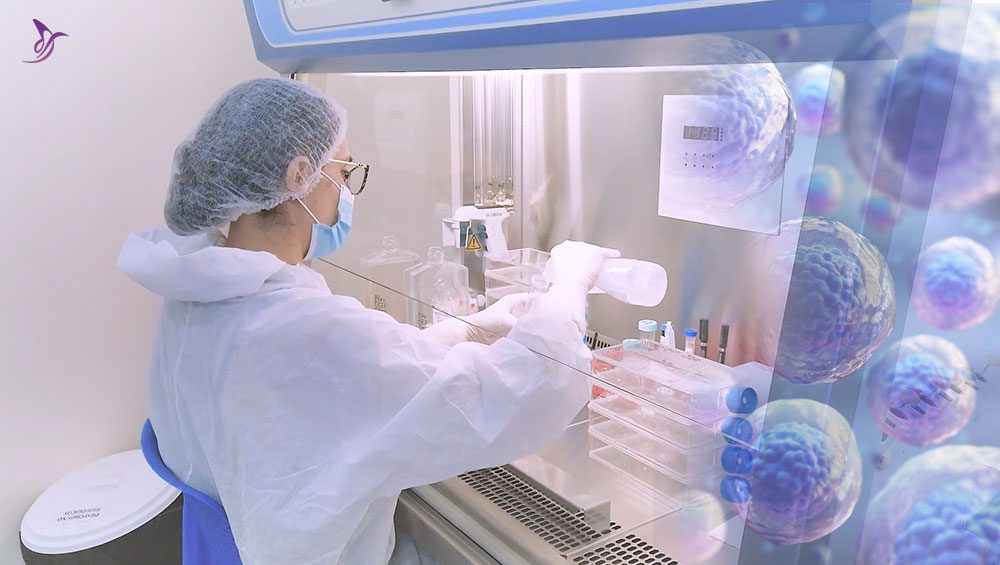
Every exosome product on the market makes roughly the same claims about particle size, marker expression, and purity. What almost none of them lead with is the variable that actually determines what’s inside the vesicle: the source. Cargo, yield, batch-to-batch consistency, and regulatory posture are set well before a manufacturer touches a bioreactor. They’re set by the cell or tissue the exosomes came from. For a physician or distributor comparing suppliers, source is the specification that should be read first, not the one buried in a footnote.
The question here is about manufacturing and characterization, not comparative clinical performance: what a given source tissue makes possible, and what it forecloses, before a single lot is ever tested.
Source Determines Cargo Long Before Manufacturing Does
An exosome is a delivery vehicle, not a fixed product. Its membrane proteins, its RNA cargo, and its functional signaling profile are inherited from the cell that secreted it. Two exosome preparations can pass the same identity panel (CD9, CD63, CD81, a consistent size distribution on nanoparticle tracking) and still carry meaningfully different cargo, because the parent cell population was different. For the underlying mechanics of how this works, see [What Are Exosomes](URL-TBD: what-are-exosomes-pillar) and our companion piece on [how exosomes are sourced and isolated](URL-TBD: exosome-sourcing-isolation).
That distinction matters most at the sourcing decision, before isolation method, storage, or lyophilization ever enter the picture. Four source categories currently dominate the research-grade supply landscape, each with a different consistency profile and a different regulatory conversation attached to it.
Mesenchymal Stem Cell–Derived Exosomes: Tissue of Origin Sets the Baseline
MSC-derived exosomes remain the most extensively characterized category, but “MSC-derived” covers a family of sources, not one specification, and tissue of origin is the first fork in that family tree.
Umbilical cord and Wharton’s jelly. Fetal-tissue-derived MSC populations, including Wharton’s jelly, are increasingly reported to show more stable transcriptomic and passage behavior than adult-tissue sources, along with a distinct secretome profile relative to bone-marrow- or adipose-derived material. That stability profile is specific to the isolation method studied in any given paper. It shouldn’t be read as a blanket property of “umbilical cord MSC” as a category. But it’s one reason umbilical-cord sourcing has become a common anchor point for manufacturers optimizing for batch reproducibility.
Adipose tissue. Adipose-derived MSC are attractive for supply-side reasons: tissue is comparatively abundant and easier to source at scale than bone marrow or perinatal tissue. The trade-off shows up in the secretome. Comparative proteomic work groups adipose- and bone-marrow-derived material together, distinct from the fetal-tissue cluster (placenta, Wharton’s jelly), meaning the two adult-tissue sources behave more like each other than either does like a perinatal source.
Bone marrow. Bone-marrow MSC exosomes carry the longest research track record and the largest existing evidence base. But bone marrow is the least scalable of the three tissue types. Donor-site morbidity and yield-per-harvest limit it in ways umbilical cord and adipose tissue don’t. For a supplier optimizing for consistent commercial-scale output, bone-marrow sourcing is increasingly the outlier rather than the default.
For the broader question of when a cell-free exosome product is the right research choice against whole-cell MSC therapy itself, see [our comparison of exosomes against stem cell therapy](URL-TBD: exosomes-vs-stem-cells).
iPSC-Derived Exosomes: Solving Supply, Opening a Different Question
Induced pluripotent stem cell–derived exosomes address the scalability ceiling directly. An iPSC line is, in principle, an infinitely renewable, clonal starting population, and it removes the donor-variability problem that affects every primary-tissue source: every batch traces back to the same characterized cell line rather than a new donor each time.
That advantage comes with a different regulatory and characterization burden. iPSC-derived material requires its own genomic-stability and differentiation-state documentation, confirming the parent line hasn’t drifted and that the exosome-producing cell population is what it’s represented to be. Primary-tissue sourcing doesn’t carry that burden in the same form. For a distributor evaluating an iPSC-sourced product, the diligence question shifts from which donor pool was used to which parent cell line was used, and what documentation stands behind its stability.
Plant-Derived Exosome-Like Nanoparticles: A Different Category Wearing the Same Name
Plant-derived exosome-like nanoparticles, sometimes called nanovesicles and typically sourced from ginger, grapefruit, or other plant tissue, share structural similarities with mammalian exosomes: a lipid bilayer, a comparable size range. They are not mammalian exosomes, though, and they don’t carry a mammalian cargo profile. Their appeal is manufacturing simplicity. Plant tissue is inexpensive, doesn’t require donor screening, and scales without the biological-material handling requirements that mammalian sourcing carries.
The characterization gap is the trade-off. Plant-derived nanoparticles are considerably less studied for consistency and batch-to-batch reproducibility than MSC- or iPSC-derived exosomes, and the field hasn’t converged on standardized identity or potency markers for them the way it has for mammalian EVs. For a research buyer, that means plant-derived material currently sits in a different evidentiary category: worth tracking, but not yet a substitutable comparison point against mammalian-sourced product.
Newer, Marketing-Led Sources: Why "Novel" Isn't the Same as "Characterized"
A growing set of exosome products are now marketed around source tissues chosen more for differentiation than for demonstrated manufacturing advantage: milk-derived exosomes, algae-derived vesicles, and various proprietary “next-generation” source claims among them. Some of these are legitimate areas of early research. None of them yet carry the depth of comparative characterization data that umbilical-cord, adipose, or bone-marrow MSC sourcing has accumulated.
The diligence question for a buyer stays the same no matter how the source is marketed: does the supplier have per-lot identity, sterility, and potency data specific to that source tissue, or is the novelty of the source substituting for the absence of it. A source being new to market is not, by itself, evidence of anything about consistency.
The SHED Signal: Where Research Attention Is Moving Next
Stem cells from human exfoliated deciduous teeth, known as SHED, are a smaller but increasingly active area of exosome-sourcing research. SHED-derived exosomes have recently been studied for their role in liver injury and fibrosis, for angiogenic signaling in endothelial cells, for anti-inflammatory activity in osteoarthritis models, and as a delivery vehicle for microRNA cargo in neurodegeneration research. The appeal from a sourcing standpoint is practical: deciduous teeth are a non-invasive, ethically simpler collection source than umbilical cord or bone marrow, with reported proliferative capacity comparable to other MSC populations.
[VERIFY: current count and phase of registered SHED-exosome clinical trials before citing a specific number.] At present, the evidence base is predominantly preclinical and in vitro rather than a mature registered-trial cluster. That’s informative on its own. SHED sits earlier on the research-to-manufacturing curve than umbilical-cord or bone-marrow MSC sourcing, worth watching rather than treated as commercially mature yet.
Stem cells from human exfoliated deciduous teeth, known as SHED, are a smaller but increasingly active area of exosome-sourcing research. SHED-derived exosomes have recently been studied for their role in liver injury and fibrosis, for angiogenic signaling in endothelial cells, for anti-inflammatory activity in osteoarthritis models, and as a delivery vehicle for microRNA cargo in neurodegeneration research. The appeal from a sourcing standpoint is practical: deciduous teeth are a non-invasive, ethically simpler collection source than umbilical cord or bone marrow, with reported proliferative capacity comparable to other MSC populations.
[VERIFY: current count and phase of registered SHED-exosome clinical trials before citing a specific number.] At present, the evidence base is predominantly preclinical and in vitro rather than a mature registered-trial cluster. That’s informative on its own. SHED sits earlier on the research-to-manufacturing curve than umbilical-cord or bone-marrow MSC sourcing, worth watching rather than treated as commercially mature yet.
What Source Actually Means for Batch Consistency and Regulatory Posture
Pulling the four categories together, the pattern holds: every sourcing decision trades something for something else.
- Consistency. Clonal or near-clonal sources (iPSC, and to a lesser extent perinatal tissue under tighter donor-screening criteria) tend toward tighter batch-to-batch variability than donor-pooled adult tissue.
- Scalability. iPSC and plant-derived sources scale more predictably than any primary human tissue source, bone marrow least of all.
- Characterization depth. MSC-derived exosomes, particularly umbilical-cord and bone-marrow sourced, carry the deepest existing comparative literature. Newer sources, mammalian or otherwise, are still building that record.
- Regulatory posture. Source tissue changes what a donor-screening and identity-testing program has to demonstrate. A primary human-tissue source carries donor-eligibility and infectious-disease-screening obligations that a clonal cell-line source doesn’t carry in the same form, while a clonal source carries genomic-stability documentation that a primary-tissue source doesn’t need.
What emerges here is a hierarchy of manufacturing behavior, not clinical performance, and manufacturing behavior is the axis a procurement decision should actually be evaluated on.
For a physician or clinic evaluating a supplier, the practical version of this is simple. Ask which source tissue is actually used. Ask what identity and potency panel is run per lot against that specific source. And ask for [the Certificate of Analysis that proves it](URL-TBD: coa-reading-guide): the lot-specific document tied to the material being shipped, never a generic template.
How CellGenic Approaches Sourcing
[VERIFY BEFORE PUBLISHING: CellGenic’s exact source tissue for its exosome product line, and a description of its donor-screening or cell-line-qualification process, confirmed with Sarah/Ash before this section is finalized.] Once confirmed, this section should state CellGenic’s sourcing choice as a first-party fact, not a comparative superiority claim, and tie it directly to the batch-consistency and identity and potency testing performed on every lot, evidenced by the Certificate of Analysis available to verified providers.
Common Questions
Primarily cargo and consistency, not handling. Storage and reconstitution requirements are driven more by formulation, lyophilized versus liquid, for example, than by source tissue itself, though source-related batch variability can affect how tightly a handling protocol needs to be specified.
Not automatically. The two can differ in cargo profile even when they pass the same identity panel, so a protocol built around one source shouldn't be assumed to transfer cleanly to the other without its own characterization work.
By asking for the same thing regardless of source: lot-specific identity, sterility, and potency data, and a Certificate of Analysis tied to that specific batch, not a general claim about the source's promise.
No. It depends on what the research application requires and which trade-off, consistency, scalability, characterization depth, or regulatory simplicity, matters most for that use case.
Source is a manufacturing and quality variable. A verified provider evaluating a supplier should be able to see it plainly, not infer it from marketing copy.
REGULATORY DISCLAIMER · EXOSOMES
These products are intended for laboratory research use only. They are not drugs, foods, cosmetics, or medical treatments and must not be used for any form of human or animal administration. All information provided is for educational and scientific reference only and the products should be handled exclusively by licensed, qualified professionals. Misbranding, misuse, or mislabeling of these products as therapeutic or consumable substances is strictly prohibited by law.