A note on the framing before anything else. This page does not assume that offering anything is appropriate. Whether it could be is the first item on the list below, and the published evidence is the thing that answers it, not this page, and not a supplier.
What follows is a diligence sequence for a licensed physician, clinic owner, or researcher assessing this field. It contains no efficacy claim, no protocol, and no procurement route.
What “Muse cell therapy” currently means
The phrase is searched heavily, and the honest answer to what Muse cells therapy refers to is uncomfortable for anyone selling it.
There is no approved Muse cell therapy, and the position is stronger than the absence of approval. The developer of CL2020, the investigational product used in every published trial, stated in December 2021 that it would pursue full approval for one indication rather than a conditional route, and then announced on 14 February 2023 that it had discontinued development of CL2020 altogether, citing clinical developments, commercialisation timelines and business strategy. No safety concern was given as a reason. The product was never approved in any market, and no active late-stage programme has replaced it. [6,7]
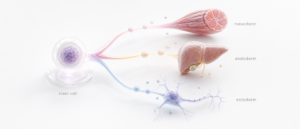
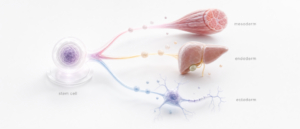
So the phrase currently describes two different things. It describes a research field with a documented origin and a small, early-stage clinical literature that is real and traceable, and it starts with what Muse cells are and how they are identified. And it describes commercial offerings that exist ahead of that evidence, which is a different matter entirely. [4,5]
Telling those apart is the whole job. The five items below are as follows.
The five things to establish, in order
1. What the published evidence actually supports
Start here, because the rest is moot if this is misread.
The published clinical record is five small early-phase trials, all in one country, all using the same investigational product, with fewer than seventy patients in total. Safety and tolerability were the primary endpoints in every case. One study, a randomised, double-blind, placebo-controlled Phase 2 trial in subacute ischaemic stroke reported by Niizuma and colleagues in 2023 produced an efficacy signal on a secondary endpoint in thirty-five patients, meeting a pre-specified threshold for potential effectiveness. No confirmatory trial has completed. [3,8,9,10]
The full record, trial by trial with phases, enrolments and outcomes, is in where the clinical research currently stands. Two things not in it are worth stating here: there is no published trial with cerebral palsy as its indication, and no registered trial in autism.
That is a field worth following. It is not a body of evidence that establishes clinical benefit in any indication. [4,5,8,9,10]
2. What regulatory framework applies where you practise
This is a question for your own regulatory counsel, not for a supplier, and the answer differs by jurisdiction.
What a physician needs to establish is specific: under what framework, if any, cellular material may be used in their jurisdiction; whether that use requires an authorised research protocol or ethics approval; and what the position is on material sourced from another market. Compliance with applicable regulation is the physician’s obligation and cannot be delegated to whoever sold the material.
A supplier can tell you what its documentation covers. It cannot tell you what you are permitted to do.
3. What the material is, and who characterised it
Muse cells are a minority subpopulation within mesenchymal stromal cell cultures that is how Kuroda and colleagues described them in 2010 and how the field has treated them since not a separate product category. A preparation labelled one way may be materially similar to a preparation labelled the other, distinguished only by whether a selection step was performed and documented the distinction is set out in how the Muse fraction sits inside a mesenchymal preparation. [4]
So: what tissue was it sourced from, what proportion of the preparation is SSEA-3-positive, and by which method was that determined. Those questions and what constitutes an acceptable answer are covered in sourcing, isolation and characterisation. [2,4,5]
4. What the batch documentation says
The gap between a literature claim and a specific lot is where diligence actually happens.
A supplier citing non-tumorigenicity is citing published papers about a cell population the basis for those papers is set out in what the published safety literature reports. What a supplier can say about its own material is narrower: what was tested on this batch, by which method, with what result, recorded against the batch number. Establish that the certificate of analysis for the specific lot is available to read before ordering rather than after, and that the batch number on it matches the vial. [2,4,5]
5. What you will say to a patient who asks
Worth rehearsing before it happens rather than during.
A physician who has worked through the four items above can describe what the evidence supports, what it does not, what regulatory position applies, and what is documented about the material. A physician who cannot do that is not in a position to have the conversation at all which is a reason to do the work, not a reason to avoid the question.
Separating the science from a product name
Searches pairing the discoverer’s name with the word treatment conflate two separate things, and the separation is the same one that applies across this subject.
Professor Mari Dezawa’s laboratory at Tohoku University published the original science, in 2010 and since. That work is peer-reviewed and citable by anyone, and it is recounted in the history of the discovery. Separately, “MuseCells®” is a registered trademark held by another commercial organisation and used as a product name by that organisation and its distributors. [4,5]
CellGenic does not use that trademark and has no current affiliation, partnership, licensing arrangement or endorsement from Professor Dezawa, her laboratory, or the holder of that mark. Neither the published science nor the trademark constitutes an approved therapy, and neither confers authority on any supplier. [6,7]
On injection and administration
Searches for Muse stem cells injection assume a procedure exists to be described. This page does not describe one.
No dosing, route, schedule or administration guidance appears anywhere on this site, for any material. The registered trials referenced above administered a specific investigational product under trial protocols with defined doses, and those details belong in the papers themselves and in the trial summaries at where the clinical research currently stands as a record of what was studied, not as a template for practice. [3,8,9,10]
If a supplier volunteers administration guidance alongside the material it sells, that tells a physician something useful about the supplier.
“Where can I get Muse stem cells?”
This search deserves a direct answer, and the direct answer depends on who is asking.
If you are a licensed physician, clinic owner or researcher, the relevant question is not where to obtain material but whether the four diligence items above can be satisfied for a given source. Nothing further here will help with that; the answers to those questions will.
If you are a patient or a member of the public: this is not a platform that supplies individuals, and no supplier should be your route into this subject. This question belongs with your own physician, who can assess your situation, tell you what is established and what is not, and advise you on whether any research pathway is appropriate for you. That conversation is the correct next step, and it is the only one this page will point you toward.
The standard to reach before proceeding
Diligence on this subject is finished when a physician can state, without reaching for a supplier’s material: what the evidence establishes and where it stops, what regulatory framework governs their own practice, what the material is and how the claim about it was measured, and what the certificate of analysis for a specific batch actually says.
Nothing on this page establishes that Muse cells treat, cure, prevent or diagnose any condition, and nothing on it supports use outside a properly authorised research setting under applicable regulation. [4,5,8,9,10]
Certificates of analysis are issued per batch and released to verified accounts. Access begins with provider verification.
Common questions
Is there an approved Muse cell therapy?
No. The published clinical record is five small early-phase trials with fewer than seventy patients in total and no completed confirmatory study and the product all of them used, CL2020, had its development discontinued by the developer on 14 February 2023 without ever being approved.
What should a physician establish before working with Muse cells at all?
Four things before any fifth consideration: what the published evidence supports and where it stops, what regulatory framework governs their own practice, what the material is and how the claim about it was measured, and what the certificate of analysis for the specific batch actually says.
Does CellGenic provide administration guidance with its material?
No. No dosing, route, schedule, or administration guidance appears anywhere on this site for any material. Doses used in registered trials belong in the trial publications as a record of what was studied, not as a template for practice. [3,8,9,10]
What does a batch-level safety claim look like, as opposed to a literature claim?
A literature claim cites published papers about a cell population. A batch-level claim states what was tested on that lot, by which method, with what result, recorded against the batch number. The two should never be presented as the same thing.
References
Sources cited or paraphrased in this article are listed alphabetically by first author.
- Departmental profile and overview of Muse cell research. Division of Stem Cell Biology and Histology, Tohoku University Graduate School of Medicine. Tohoku University →
- Multilineage-differentiating stress-enduring cells: a powerful tool for tissue damage repair. Frontiers in Cell and Developmental Biology. 2024;12:1380785. PubMed / PMC →
- Safety and feasibility of intravenous administration of a single dose of allogenic-Muse cells to treat human cervical traumatic spinal cord injury: a clinical trial. Stem Cell Research & Therapy. 2024;15(1):259. PubMed →
- Unique multipotent cells in adult human mesenchymal cell populations. Proceedings of the National Academy of Sciences. 2010;107(19):8639–8643. PubMed →
- Muse cells: ushering in a new era of stem cell-based therapy for stroke. Stem Cell Research & Therapy. 2022;13(1):421. PubMed / PMC →
- Development of a regenerative medicine product (CL2020) using Muse cells. Mitsubishi Chemical Group Corporate Announcement. 15 December 2021. Official Release →
- Discontinuation of the development of a regenerative medicine product (CL2020) using Muse cells. Mitsubishi Chemical Group Corporate Announcement. 14 February 2023. Official Release →
- Randomized placebo-controlled trial of CL2020, an allogenic Muse cell-based product, in subacute ischemic stroke. Journal of Cerebral Blood Flow & Metabolism. 2024;44(4):589–601. PubMed →
- Safety and tolerability of a Muse cell-based product in neonatal hypoxic-ischemic encephalopathy with therapeutic hypothermia (SHIELD trial). Stem Cells Translational Medicine. 2024;13(11):1053–1066. PubMed →
- Safety and clinical effects of a Muse cell-based product in patients with amyotrophic lateral sclerosis: results of a phase 2 clinical trial. Cell Transplantation. 2023;32:1–11. PubMed →
REGULATORY DISCLAIMER · CELLS
These products are intended for laboratory research use only. They are not drugs, foods, cosmetics, or medical treatments and must not be used for any form of human or animal administration. All information provided is for educational and scientific reference only and the products should be handled exclusively by licensed, qualified professionals. Misbranding, misuse, or mislabeling of these products as therapeutic or consumable substances is strictly prohibited by law.